


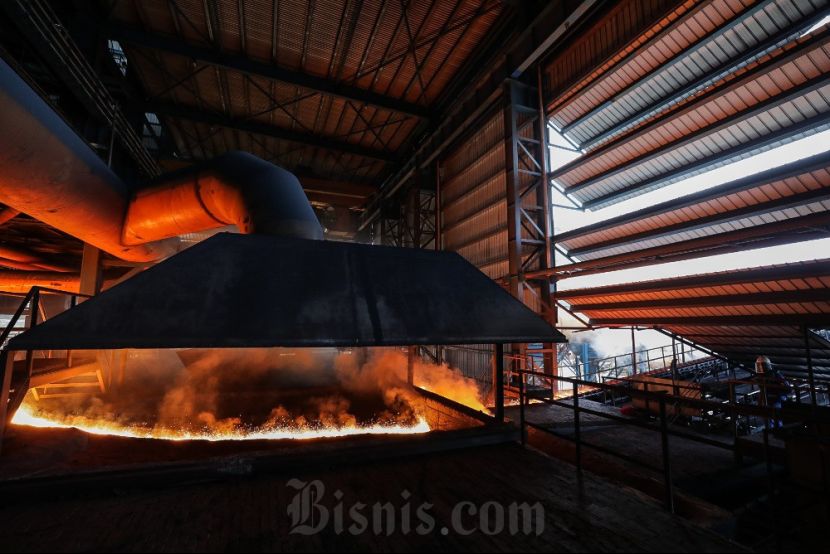
 The Indonesian Nickel Miners Association (APNI) warns that with the reduction of nickel ore production quotas in 2026, domestic smelters will face a severe supply crisis of nickel ore. In its 2026 Work Plan and Budget (RKAB), the Ministry of Energy and Mineral Resources (ESDM) set the nickel ore production quota at 260 to 270 million tons, a sharp decrease from 379 million tons in 2025. The Secretary General of APNI stated that the actual demand for nickel ore from domestic smelters in 2026 is 380 to 400 million tons, creating a gap of approximately 130 million tons between quota and demand.
To fill the gap, smelters have to rely on imports, but imports also face difficulties—currently Indonesia can only import a maximum of 23 billion tons of nickel ore from the Philippines. It is reported that the Philippines' annual nickel ore output is about 50 billion tons, of which 280 to 300 million tons are already under irrevocable contracts with China, leaving a limited share available for export to Indonesia, far from meeting domestic demand, and there is no other alternative supply source.
He also pointed out that some companies have not yet officially received their 2026 RKAB quotas, and quota allocation is unfair. For example, a company integrated with a smelter needs 50 billion tons of nickel ore but received only 30% of its quota; whereas another company that only needs 20 billion tons received a quota exceeding its actual demand. Companies generally believe that the quota approval calculation method is not fair enough.
The Director General of Minerals and Coal at the Ministry of ESDM confirmed the 2026 nickel ore quota range and stated that the production cut is a proactive government measure aimed at boosting global nickel prices. In 2025, global nickel prices stagnated at USD 14,000 per ton. After the government announced production cuts in late 2025, global nickel prices rose back to over USD 18,000 per ton in early this year, a level last seen in October 2024. Although the quota reduction has achieved the short-term effect of lifting nickel prices, it has also put supply pressure on domestic smelters, and the limitations of import channels have further exacerbated the crisis.
The Indonesian Nickel Miners Association (APNI) warns that with the reduction of nickel ore production quotas in 2026, domestic smelters will face a severe supply crisis of nickel ore. In its 2026 Work Plan and Budget (RKAB), the Ministry of Energy and Mineral Resources (ESDM) set the nickel ore production quota at 260 to 270 million tons, a sharp decrease from 379 million tons in 2025. The Secretary General of APNI stated that the actual demand for nickel ore from domestic smelters in 2026 is 380 to 400 million tons, creating a gap of approximately 130 million tons between quota and demand.
To fill the gap, smelters have to rely on imports, but imports also face difficulties—currently Indonesia can only import a maximum of 23 billion tons of nickel ore from the Philippines. It is reported that the Philippines' annual nickel ore output is about 50 billion tons, of which 280 to 300 million tons are already under irrevocable contracts with China, leaving a limited share available for export to Indonesia, far from meeting domestic demand, and there is no other alternative supply source.
He also pointed out that some companies have not yet officially received their 2026 RKAB quotas, and quota allocation is unfair. For example, a company integrated with a smelter needs 50 billion tons of nickel ore but received only 30% of its quota; whereas another company that only needs 20 billion tons received a quota exceeding its actual demand. Companies generally believe that the quota approval calculation method is not fair enough.
The Director General of Minerals and Coal at the Ministry of ESDM confirmed the 2026 nickel ore quota range and stated that the production cut is a proactive government measure aimed at boosting global nickel prices. In 2025, global nickel prices stagnated at USD 14,000 per ton. After the government announced production cuts in late 2025, global nickel prices rose back to over USD 18,000 per ton in early this year, a level last seen in October 2024. Although the quota reduction has achieved the short-term effect of lifting nickel prices, it has also put supply pressure on domestic smelters, and the limitations of import channels have further exacerbated the crisis.
The Indonesian Nickel Miners Association (APNI) warns that with the reduction of nickel ore production quotas in 2026, domestic smelters will face a severe supply crisis of nickel ore. In its 2026 Work Plan and Budget (RKAB), the Ministry of Energy and Mineral Resources (ESDM) set the nickel ore production quota at 260 to 270 million tons, a sharp decrease from 379 million tons in 2025. The Secretary General of APNI stated that the actual demand for nickel ore from domestic smelters in 2026 is 380 to 400 million tons, creating a gap of approximately 130 million tons between quota and demand.
To fill the gap, smelters have to rely on imports, but imports also face difficulties—currently Indonesia can only import a maximum of 23 billion tons of nickel ore from the Philippines. It is reported that the Philippines' annual nickel ore output is about 50 billion tons, of which 280 to 300 million tons are already under irrevocable contracts with China, leaving a limited share available for export to Indonesia, far from meeting domestic demand, and there is no other alternative supply source.
He also pointed out that some companies have not yet officially received their 2026 RKAB quotas, and quota allocation is unfair. For example, a company integrated with a smelter needs 50 billion tons of nickel ore but received only 30% of its quota; whereas another company that only needs 20 billion tons received a quota exceeding its actual demand. Companies generally believe that the quota approval calculation method is not fair enough.
The Director General of Minerals and Coal at the Ministry of ESDM confirmed the 2026 nickel ore quota range and stated that the production cut is a proactive government measure aimed at boosting global nickel prices. In 2025, global nickel prices stagnated at USD 14,000 per ton. After the government announced production cuts in late 2025, global nickel prices rose back to over USD 18,000 per ton in early this year, a level last seen in October 2024. Although the quota reduction has achieved the short-term effect of lifting nickel prices, it has also put supply pressure on domestic smelters, and the limitations of import channels have further exacerbated the crisis.
The Indonesian Nickel Miners Association (APNI) warns that with the reduction of nickel ore production quotas in 2026, domestic smelters will face a severe supply crisis of nickel ore. In its 2026 Work Plan and Budget (RKAB), the Ministry of Energy and Mineral Resources (ESDM) set the nickel ore production quota at 260 to 270 million tons, a sharp decrease from 379 million tons in 2025. The Secretary General of APNI stated that the actual demand for nickel ore from domestic smelters in 2026 is 380 to 400 million tons, creating a gap of approximately 130 million tons between quota and demand.
To fill the gap, smelters have to rely on imports, but imports also face difficulties—currently Indonesia can only import a maximum of 23 billion tons of nickel ore from the Philippines. It is reported that the Philippines' annual nickel ore output is about 50 billion tons, of which 280 to 300 million tons are already under irrevocable contracts with China, leaving a limited share available for export to Indonesia, far from meeting domestic demand, and there is no other alternative supply source.
He also pointed out that some companies have not yet officially received their 2026 RKAB quotas, and quota allocation is unfair. For example, a company integrated with a smelter needs 50 billion tons of nickel ore but received only 30% of its quota; whereas another company that only needs 20 billion tons received a quota exceeding its actual demand. Companies generally believe that the quota approval calculation method is not fair enough.
The Director General of Minerals and Coal at the Ministry of ESDM confirmed the 2026 nickel ore quota range and stated that the production cut is a proactive government measure aimed at boosting global nickel prices. In 2025, global nickel prices stagnated at USD 14,000 per ton. After the government announced production cuts in late 2025, global nickel prices rose back to over USD 18,000 per ton in early this year, a level last seen in October 2024. Although the quota reduction has achieved the short-term effect of lifting nickel prices, it has also put supply pressure on domestic smelters, and the limitations of import channels have further exacerbated the crisis.