


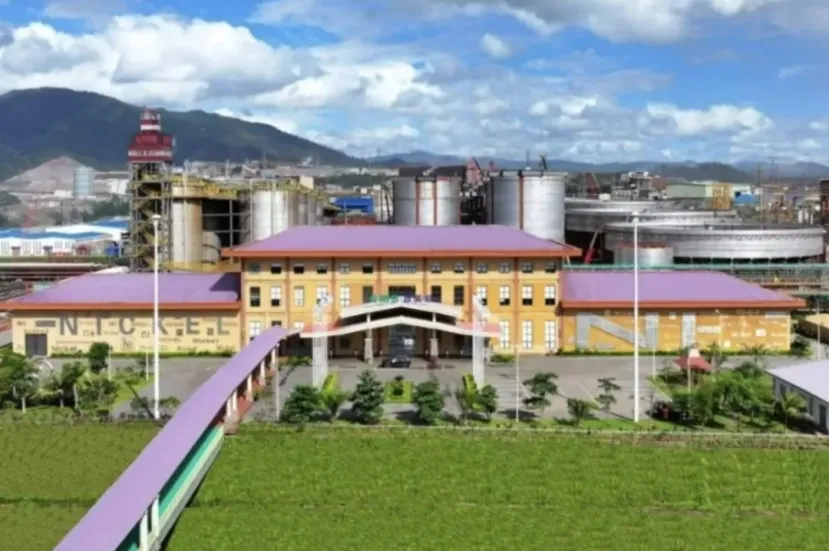
 GEM Group, through its subsidiary PT QMB New Energy Materials Company, is vigorously promoting downstream deep processing of nickel ore resources in Indonesia, helping Indonesia secure a more strategic position in the global electric vehicle (EV) battery supply chain. The Chairman and Founder of GEM Group stated in Jakarta that in the past, large amounts of low-grade laterite nickel ore in Indonesia were not effectively utilized. Now, through the Group's self-developed technology, it can not only deep-process such ores but also achieve efficient recovery of nickel and cobalt resources, with a comprehensive recovery rate exceeding 90%.
Relying on this technology, GEM has built an integrated industrial chain facility in Indonesia, from ore processing to nickel sulfate and battery precursor production. Nickel sulfate and precursors are the core raw materials of the global EV battery supply chain. This move is regarded as an important strategy for Indonesia's nickel industry upgrade, marking the country's transformation from a mere nickel raw material exporter into a key player in the global new energy industry chain. Industrial operation data show that during the 2024-2025 period, GEM's industrial park in Morowali achieved export revenue of approximately USD 2.5 billion, contributed USD 400 million in taxes, and created over 10,000 local jobs, fully demonstrating that downstream processing of nickel not only optimizes the industrial structure but also directly drives economic growth and people's livelihoods.
In terms of technological innovation, GEM has also increased its efforts by cooperating with Bandung Institute of Technology (ITB) in Indonesia to build a joint R&D facility with a total investment of approximately USD 30 million. The laboratory is equipped with over 300 sets of R&D equipment, covering the entire research chain from metallurgical processes to battery material performance evaluation, aiming to strengthen industry-academia-research collaboration and accelerate the iteration of Indonesia's local nickel processing technology. In the long run, this technological cooperation and industrial synergy will effectively reduce Indonesia's dependence on external technology, consolidate the country's innovation foundation, and promote the development of Indonesia's global new energy industry chain with greater autonomy and higher added value.
GEM Group, through its subsidiary PT QMB New Energy Materials Company, is vigorously promoting downstream deep processing of nickel ore resources in Indonesia, helping Indonesia secure a more strategic position in the global electric vehicle (EV) battery supply chain. The Chairman and Founder of GEM Group stated in Jakarta that in the past, large amounts of low-grade laterite nickel ore in Indonesia were not effectively utilized. Now, through the Group's self-developed technology, it can not only deep-process such ores but also achieve efficient recovery of nickel and cobalt resources, with a comprehensive recovery rate exceeding 90%.
Relying on this technology, GEM has built an integrated industrial chain facility in Indonesia, from ore processing to nickel sulfate and battery precursor production. Nickel sulfate and precursors are the core raw materials of the global EV battery supply chain. This move is regarded as an important strategy for Indonesia's nickel industry upgrade, marking the country's transformation from a mere nickel raw material exporter into a key player in the global new energy industry chain. Industrial operation data show that during the 2024-2025 period, GEM's industrial park in Morowali achieved export revenue of approximately USD 2.5 billion, contributed USD 400 million in taxes, and created over 10,000 local jobs, fully demonstrating that downstream processing of nickel not only optimizes the industrial structure but also directly drives economic growth and people's livelihoods.
In terms of technological innovation, GEM has also increased its efforts by cooperating with Bandung Institute of Technology (ITB) in Indonesia to build a joint R&D facility with a total investment of approximately USD 30 million. The laboratory is equipped with over 300 sets of R&D equipment, covering the entire research chain from metallurgical processes to battery material performance evaluation, aiming to strengthen industry-academia-research collaboration and accelerate the iteration of Indonesia's local nickel processing technology. In the long run, this technological cooperation and industrial synergy will effectively reduce Indonesia's dependence on external technology, consolidate the country's innovation foundation, and promote the development of Indonesia's global new energy industry chain with greater autonomy and higher added value.
GEM Group, through its subsidiary PT QMB New Energy Materials Company, is vigorously promoting downstream deep processing of nickel ore resources in Indonesia, helping Indonesia secure a more strategic position in the global electric vehicle (EV) battery supply chain. The Chairman and Founder of GEM Group stated in Jakarta that in the past, large amounts of low-grade laterite nickel ore in Indonesia were not effectively utilized. Now, through the Group's self-developed technology, it can not only deep-process such ores but also achieve efficient recovery of nickel and cobalt resources, with a comprehensive recovery rate exceeding 90%.
Relying on this technology, GEM has built an integrated industrial chain facility in Indonesia, from ore processing to nickel sulfate and battery precursor production. Nickel sulfate and precursors are the core raw materials of the global EV battery supply chain. This move is regarded as an important strategy for Indonesia's nickel industry upgrade, marking the country's transformation from a mere nickel raw material exporter into a key player in the global new energy industry chain. Industrial operation data show that during the 2024-2025 period, GEM's industrial park in Morowali achieved export revenue of approximately USD 2.5 billion, contributed USD 400 million in taxes, and created over 10,000 local jobs, fully demonstrating that downstream processing of nickel not only optimizes the industrial structure but also directly drives economic growth and people's livelihoods.
In terms of technological innovation, GEM has also increased its efforts by cooperating with Bandung Institute of Technology (ITB) in Indonesia to build a joint R&D facility with a total investment of approximately USD 30 million. The laboratory is equipped with over 300 sets of R&D equipment, covering the entire research chain from metallurgical processes to battery material performance evaluation, aiming to strengthen industry-academia-research collaboration and accelerate the iteration of Indonesia's local nickel processing technology. In the long run, this technological cooperation and industrial synergy will effectively reduce Indonesia's dependence on external technology, consolidate the country's innovation foundation, and promote the development of Indonesia's global new energy industry chain with greater autonomy and higher added value.
GEM Group, through its subsidiary PT QMB New Energy Materials Company, is vigorously promoting downstream deep processing of nickel ore resources in Indonesia, helping Indonesia secure a more strategic position in the global electric vehicle (EV) battery supply chain. The Chairman and Founder of GEM Group stated in Jakarta that in the past, large amounts of low-grade laterite nickel ore in Indonesia were not effectively utilized. Now, through the Group's self-developed technology, it can not only deep-process such ores but also achieve efficient recovery of nickel and cobalt resources, with a comprehensive recovery rate exceeding 90%.
Relying on this technology, GEM has built an integrated industrial chain facility in Indonesia, from ore processing to nickel sulfate and battery precursor production. Nickel sulfate and precursors are the core raw materials of the global EV battery supply chain. This move is regarded as an important strategy for Indonesia's nickel industry upgrade, marking the country's transformation from a mere nickel raw material exporter into a key player in the global new energy industry chain. Industrial operation data show that during the 2024-2025 period, GEM's industrial park in Morowali achieved export revenue of approximately USD 2.5 billion, contributed USD 400 million in taxes, and created over 10,000 local jobs, fully demonstrating that downstream processing of nickel not only optimizes the industrial structure but also directly drives economic growth and people's livelihoods.
In terms of technological innovation, GEM has also increased its efforts by cooperating with Bandung Institute of Technology (ITB) in Indonesia to build a joint R&D facility with a total investment of approximately USD 30 million. The laboratory is equipped with over 300 sets of R&D equipment, covering the entire research chain from metallurgical processes to battery material performance evaluation, aiming to strengthen industry-academia-research collaboration and accelerate the iteration of Indonesia's local nickel processing technology. In the long run, this technological cooperation and industrial synergy will effectively reduce Indonesia's dependence on external technology, consolidate the country's innovation foundation, and promote the development of Indonesia's global new energy industry chain with greater autonomy and higher added value.