


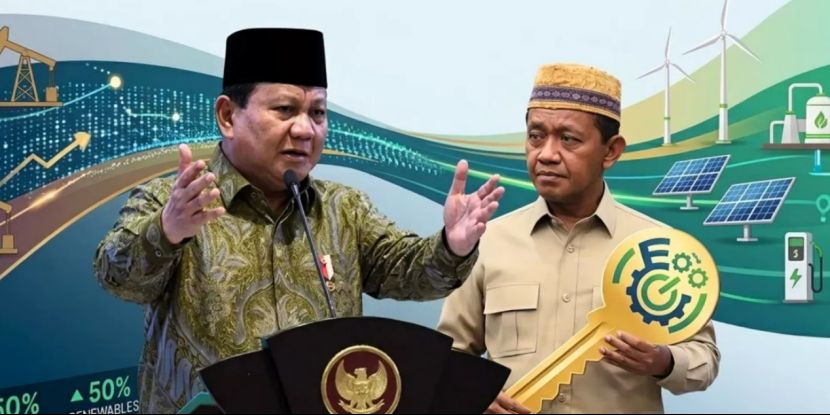
 The Indonesian government is accelerating energy structure transformation, supporting long-term economic strategy with environmental protection and sustainable development. After presiding over a cabinet meeting at the State Palace in Jakarta, President Prabowo officially appointed the Minister of Energy and Mineral Resources as the head of the Energy Transition Acceleration Task Force to coordinate national energy transition policies and projects. The meeting set the core direction of gradually reducing dependence on fossil energy, accelerating the transition to a clean energy system, and launching several priority initiatives.
One of the most notable is the large-scale solar power development plan with a total installed capacity of 100 gigawatts. The power stations will be connected to the grid and cover grassroots locations such as schools and rural communities, bringing clean energy to people's daily lives. The government also plans to gradually replace diesel power generation to reduce costs, environmental pressure, and the national subsidy burden, while improving the efficiency of the power system. As an archipelagic country, solar energy is also used to address insufficient power supply in remote areas and promote energy equity.
The energy transition also extends to the transportation sector. President Prabowo has called for accelerating motor vehicle electrification, with the goal of gradually replacing approximately 120 million motorcycles with electric motorcycles to reduce fossil fuel consumption and carbon emissions, and to improve the local EV industry chain. The Minister of Energy stated that the task force will improve efficiency in using fiscal funds and promote rapid project implementation. The President has set a transition period of 3 to 4 years and is striving to complete it faster.
With the establishment of a dedicated task force, Indonesia has sent a clear signal: it will accelerate the transition toward a green and sustainable energy system in a more efficient and coordinated manner.
The Indonesian government is accelerating energy structure transformation, supporting long-term economic strategy with environmental protection and sustainable development. After presiding over a cabinet meeting at the State Palace in Jakarta, President Prabowo officially appointed the Minister of Energy and Mineral Resources as the head of the Energy Transition Acceleration Task Force to coordinate national energy transition policies and projects. The meeting set the core direction of gradually reducing dependence on fossil energy, accelerating the transition to a clean energy system, and launching several priority initiatives.
One of the most notable is the large-scale solar power development plan with a total installed capacity of 100 gigawatts. The power stations will be connected to the grid and cover grassroots locations such as schools and rural communities, bringing clean energy to people's daily lives. The government also plans to gradually replace diesel power generation to reduce costs, environmental pressure, and the national subsidy burden, while improving the efficiency of the power system. As an archipelagic country, solar energy is also used to address insufficient power supply in remote areas and promote energy equity.
The energy transition also extends to the transportation sector. President Prabowo has called for accelerating motor vehicle electrification, with the goal of gradually replacing approximately 120 million motorcycles with electric motorcycles to reduce fossil fuel consumption and carbon emissions, and to improve the local EV industry chain. The Minister of Energy stated that the task force will improve efficiency in using fiscal funds and promote rapid project implementation. The President has set a transition period of 3 to 4 years and is striving to complete it faster.
With the establishment of a dedicated task force, Indonesia has sent a clear signal: it will accelerate the transition toward a green and sustainable energy system in a more efficient and coordinated manner.
The Indonesian government is accelerating energy structure transformation, supporting long-term economic strategy with environmental protection and sustainable development. After presiding over a cabinet meeting at the State Palace in Jakarta, President Prabowo officially appointed the Minister of Energy and Mineral Resources as the head of the Energy Transition Acceleration Task Force to coordinate national energy transition policies and projects. The meeting set the core direction of gradually reducing dependence on fossil energy, accelerating the transition to a clean energy system, and launching several priority initiatives.
One of the most notable is the large-scale solar power development plan with a total installed capacity of 100 gigawatts. The power stations will be connected to the grid and cover grassroots locations such as schools and rural communities, bringing clean energy to people's daily lives. The government also plans to gradually replace diesel power generation to reduce costs, environmental pressure, and the national subsidy burden, while improving the efficiency of the power system. As an archipelagic country, solar energy is also used to address insufficient power supply in remote areas and promote energy equity.
The energy transition also extends to the transportation sector. President Prabowo has called for accelerating motor vehicle electrification, with the goal of gradually replacing approximately 120 million motorcycles with electric motorcycles to reduce fossil fuel consumption and carbon emissions, and to improve the local EV industry chain. The Minister of Energy stated that the task force will improve efficiency in using fiscal funds and promote rapid project implementation. The President has set a transition period of 3 to 4 years and is striving to complete it faster.
With the establishment of a dedicated task force, Indonesia has sent a clear signal: it will accelerate the transition toward a green and sustainable energy system in a more efficient and coordinated manner.
The Indonesian government is accelerating energy structure transformation, supporting long-term economic strategy with environmental protection and sustainable development. After presiding over a cabinet meeting at the State Palace in Jakarta, President Prabowo officially appointed the Minister of Energy and Mineral Resources as the head of the Energy Transition Acceleration Task Force to coordinate national energy transition policies and projects. The meeting set the core direction of gradually reducing dependence on fossil energy, accelerating the transition to a clean energy system, and launching several priority initiatives.
One of the most notable is the large-scale solar power development plan with a total installed capacity of 100 gigawatts. The power stations will be connected to the grid and cover grassroots locations such as schools and rural communities, bringing clean energy to people's daily lives. The government also plans to gradually replace diesel power generation to reduce costs, environmental pressure, and the national subsidy burden, while improving the efficiency of the power system. As an archipelagic country, solar energy is also used to address insufficient power supply in remote areas and promote energy equity.
The energy transition also extends to the transportation sector. President Prabowo has called for accelerating motor vehicle electrification, with the goal of gradually replacing approximately 120 million motorcycles with electric motorcycles to reduce fossil fuel consumption and carbon emissions, and to improve the local EV industry chain. The Minister of Energy stated that the task force will improve efficiency in using fiscal funds and promote rapid project implementation. The President has set a transition period of 3 to 4 years and is striving to complete it faster.
With the establishment of a dedicated task force, Indonesia has sent a clear signal: it will accelerate the transition toward a green and sustainable energy system in a more efficient and coordinated manner.