


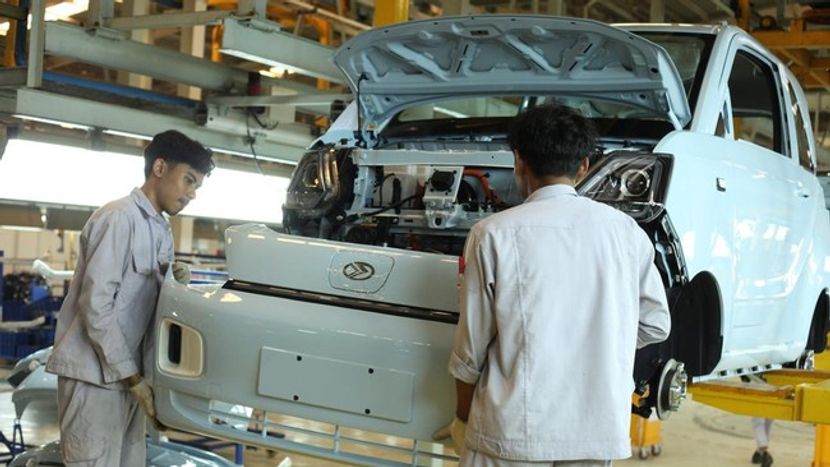
 The Ministry of Industry proposes higher incentives for nickel battery (NCM/NCA) electric vehicles over lithium iron phosphate (LFP) battery models, which industry observers believe can drive the development of Indonesia's automotive industry. Indonesia has the world's largest nickel reserves (approximately 55 million tons, 45% of global total) and is the world's largest nickel producer (50% of global output). This policy has strong macroeconomic logic, reflects industrial nationalism, and can promote deep integration of Indonesia's upstream nickel industry with downstream battery and EV industries, creating a vertically integrated ecosystem and maximizing added value.
Batteries are the most critical and costly component of EVs, accounting for 40%-50% of vehicle production costs. Nickel batteries offer higher energy density and longer range, but their production cost per kWh is 35%-40% higher than LFP batteries. Observers believe the government needs to bridge this cost gap through incentive policies to give nickel battery EVs a clearer price advantage in the Indonesian market.
This incentive policy can also protect and compel EV manufacturers to build factories in Indonesia, reducing reliance on LFP battery imports and shifting toward a localized industrial ecosystem. Additionally, using nickel batteries helps manufacturers more easily meet the government's 40% minimum domestic content requirement (TKDN).
Earlier this year, the Minister of Industry revealed that a new incentive scheme for EVs based on battery chemistry is being studied, with nickel battery models receiving greater incentives. The scheme will also consider TKDN standards and emission standards, while setting price ranges for each market segment as core conditions for incentive eligibility.
Compared to pandemic-era policies, the new scheme is more detailed in terms of market segmentation, technical standards, TKDN ratios and weights, and the proposal has been submitted to the Ministry of Finance.
The Ministry of Industry proposes higher incentives for nickel battery (NCM/NCA) electric vehicles over lithium iron phosphate (LFP) battery models, which industry observers believe can drive the development of Indonesia's automotive industry. Indonesia has the world's largest nickel reserves (approximately 55 million tons, 45% of global total) and is the world's largest nickel producer (50% of global output). This policy has strong macroeconomic logic, reflects industrial nationalism, and can promote deep integration of Indonesia's upstream nickel industry with downstream battery and EV industries, creating a vertically integrated ecosystem and maximizing added value.
Batteries are the most critical and costly component of EVs, accounting for 40%-50% of vehicle production costs. Nickel batteries offer higher energy density and longer range, but their production cost per kWh is 35%-40% higher than LFP batteries. Observers believe the government needs to bridge this cost gap through incentive policies to give nickel battery EVs a clearer price advantage in the Indonesian market.
This incentive policy can also protect and compel EV manufacturers to build factories in Indonesia, reducing reliance on LFP battery imports and shifting toward a localized industrial ecosystem. Additionally, using nickel batteries helps manufacturers more easily meet the government's 40% minimum domestic content requirement (TKDN).
Earlier this year, the Minister of Industry revealed that a new incentive scheme for EVs based on battery chemistry is being studied, with nickel battery models receiving greater incentives. The scheme will also consider TKDN standards and emission standards, while setting price ranges for each market segment as core conditions for incentive eligibility.
Compared to pandemic-era policies, the new scheme is more detailed in terms of market segmentation, technical standards, TKDN ratios and weights, and the proposal has been submitted to the Ministry of Finance.
The Ministry of Industry proposes higher incentives for nickel battery (NCM/NCA) electric vehicles over lithium iron phosphate (LFP) battery models, which industry observers believe can drive the development of Indonesia's automotive industry. Indonesia has the world's largest nickel reserves (approximately 55 million tons, 45% of global total) and is the world's largest nickel producer (50% of global output). This policy has strong macroeconomic logic, reflects industrial nationalism, and can promote deep integration of Indonesia's upstream nickel industry with downstream battery and EV industries, creating a vertically integrated ecosystem and maximizing added value.
Batteries are the most critical and costly component of EVs, accounting for 40%-50% of vehicle production costs. Nickel batteries offer higher energy density and longer range, but their production cost per kWh is 35%-40% higher than LFP batteries. Observers believe the government needs to bridge this cost gap through incentive policies to give nickel battery EVs a clearer price advantage in the Indonesian market.
This incentive policy can also protect and compel EV manufacturers to build factories in Indonesia, reducing reliance on LFP battery imports and shifting toward a localized industrial ecosystem. Additionally, using nickel batteries helps manufacturers more easily meet the government's 40% minimum domestic content requirement (TKDN).
Earlier this year, the Minister of Industry revealed that a new incentive scheme for EVs based on battery chemistry is being studied, with nickel battery models receiving greater incentives. The scheme will also consider TKDN standards and emission standards, while setting price ranges for each market segment as core conditions for incentive eligibility.
Compared to pandemic-era policies, the new scheme is more detailed in terms of market segmentation, technical standards, TKDN ratios and weights, and the proposal has been submitted to the Ministry of Finance.
The Ministry of Industry proposes higher incentives for nickel battery (NCM/NCA) electric vehicles over lithium iron phosphate (LFP) battery models, which industry observers believe can drive the development of Indonesia's automotive industry. Indonesia has the world's largest nickel reserves (approximately 55 million tons, 45% of global total) and is the world's largest nickel producer (50% of global output). This policy has strong macroeconomic logic, reflects industrial nationalism, and can promote deep integration of Indonesia's upstream nickel industry with downstream battery and EV industries, creating a vertically integrated ecosystem and maximizing added value.
Batteries are the most critical and costly component of EVs, accounting for 40%-50% of vehicle production costs. Nickel batteries offer higher energy density and longer range, but their production cost per kWh is 35%-40% higher than LFP batteries. Observers believe the government needs to bridge this cost gap through incentive policies to give nickel battery EVs a clearer price advantage in the Indonesian market.
This incentive policy can also protect and compel EV manufacturers to build factories in Indonesia, reducing reliance on LFP battery imports and shifting toward a localized industrial ecosystem. Additionally, using nickel batteries helps manufacturers more easily meet the government's 40% minimum domestic content requirement (TKDN).
Earlier this year, the Minister of Industry revealed that a new incentive scheme for EVs based on battery chemistry is being studied, with nickel battery models receiving greater incentives. The scheme will also consider TKDN standards and emission standards, while setting price ranges for each market segment as core conditions for incentive eligibility.
Compared to pandemic-era policies, the new scheme is more detailed in terms of market segmentation, technical standards, TKDN ratios and weights, and the proposal has been submitted to the Ministry of Finance.