


Detailed Content
About the Author
Song Xiuju, male, born in Zigui, Hubei Province, is Deputy Director of the China-Indonesia People-to-People Exchange Research Center at Central China Normal University, Associate Professor and Master's Supervisor at the School of Politics and International Relations. He graduated with a master's degree in Modern World History from Central China Normal University in 2000. In 2003, he entered the Institute of Political Science of Central China Normal University to pursue a Ph.D. in International Relations, obtaining his doctorate (Law) in 2006, mainly focusing on international cooperation theory. From 2012 to 2013, he was a visiting scholar at the Department of Political Science, Duke University, USA. Since 2013, he has concentrated on research on Indonesia and China-Indonesia relations.
Content Overview
The book is divided into four chapters: Energy Chapter—Indonesia's rich energy resources as the basis for cooperation; Legal Chapter—legal norms for China-Indonesia energy cooperation; Risk Chapter—risks and challenges in energy cooperation with Indonesia; Cooperation Chapter—current status and future of China-Indonesia energy cooperation.
In the energy cooperation between China and Indonesia, China is the proactive "going global" party. Chinese energy enterprises must not only fully understand Indonesia's energy resources but also comply with Indonesian domestic legal norms such as energy resource law, land law, investment law, labor law, and environmental protection law. Additionally, Chinese energy enterprises must have a clear understanding of risks in Indonesia's natural environment, politics, social security, business, and health sectors. The "localization" of Chinese energy enterprises in Indonesia is the fundamental path for sustainable China-Indonesia energy cooperation.
Recommendation
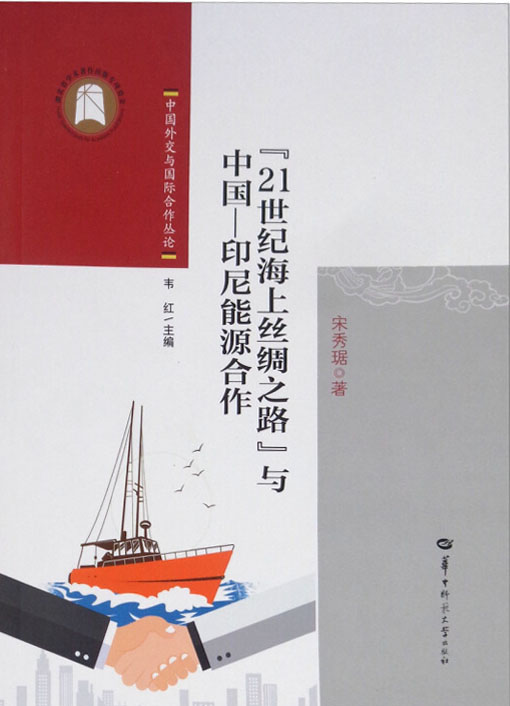
This book, "21st Century Maritime Silk Road and China-Indonesia Energy Cooperation" by Song Xiuju, aims to illustrate that domestic factors of each country have a decisive impact on international cooperation, while supranational factors such as international power structures, international institutions, and international anarchic culture have limited influence.