


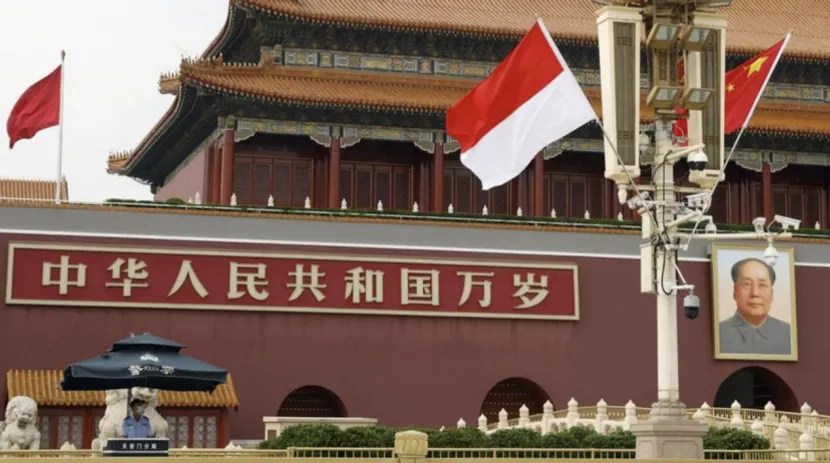
 Over the past two decades, China has carried out large-scale, systematic global investment expansion, and Indonesia has become China's largest investment destination in Asia. Through outward investment, China has not only strengthened its economic influence but also expanded its geopolitical network and global supply chain layout. According to Visual Capitalist data, from 2005 to the present, Chinese companies have invested over $1.5 trillion globally, equivalent to approximately 25,350 trillion rupiah. However, these investments are unevenly distributed, with only a few countries being the main destinations for Chinese capital.
Despite ongoing geopolitical tensions between China and the United States, the US remains China's top global investment destination over the past two decades. From 2005 to 2025, Chinese companies invested approximately $204 billion in the US, ranking first globally. However, in recent years, US investment thresholds have tightened, and the Committee on Foreign Investment in the United States has significantly strengthened regulatory scrutiny of foreign investments, especially those from China, amid heightened political and security tensions. Even so, Chinese investment in the US has not completely halted, with new investments in 2025 still close to $4 billion, reflecting the difficulty of completely severing economic ties between the two countries.
Australia and the United Kingdom rank second and third in Chinese outward investment, with amounts of $108.12 billion and $106.58 billion, respectively. The investment characteristics of the two countries differ significantly: Australia, with its resource and energy advantages, attracts substantial Chinese investment in related sectors, meeting China's demand for industrial raw materials; the UK attracts diversified investments, mainly flowing into real estate, technology, infrastructure, and other fields, including large energy and transportation projects, with the financial sector also being a key area, as Chinese banks and financial institutions use London as a global hub for their operations.
Among developing countries, Indonesia's strategic investment position is increasingly prominent, attracting a cumulative Chinese investment of $49.37 billion from 2005 to 2025, with a significant acceleration in recent years, making it China's largest investment destination in Asia. Data from the Indonesian Investment Coordinating Board shows that Chinese investment in Indonesia has achieved leapfrog growth: only $297 million in 2013, ranking as the 12th largest investor; rising to $628 million in 2015, ranking ninth; and entering the top three in 2017. Before 2019, Chinese investment in Indonesia was mostly below $1 billion, but after 2019, it consistently exceeded $1 billion, reaching $7.5 billion in 2025, firmly securing Indonesia's position as the third largest foreign investment source.
If including Hong Kong, the related investment scale would rise to $18.1 billion. This growth stems both from Chinese companies relocating production bases abroad to avoid US tariff pressures and from Indonesia's vast domestic market. At the same time, Chinese capital flows heavily into Indonesia's industrial and downstream supply chains, focusing on basic metals, electric vehicle batteries, and other energy supply chain sectors, driving continuous deepening of bilateral industrial cooperation.
Over the past two decades, China has carried out large-scale, systematic global investment expansion, and Indonesia has become China's largest investment destination in Asia. Through outward investment, China has not only strengthened its economic influence but also expanded its geopolitical network and global supply chain layout. According to Visual Capitalist data, from 2005 to the present, Chinese companies have invested over $1.5 trillion globally, equivalent to approximately 25,350 trillion rupiah. However, these investments are unevenly distributed, with only a few countries being the main destinations for Chinese capital.
Despite ongoing geopolitical tensions between China and the United States, the US remains China's top global investment destination over the past two decades. From 2005 to 2025, Chinese companies invested approximately $204 billion in the US, ranking first globally. However, in recent years, US investment thresholds have tightened, and the Committee on Foreign Investment in the United States has significantly strengthened regulatory scrutiny of foreign investments, especially those from China, amid heightened political and security tensions. Even so, Chinese investment in the US has not completely halted, with new investments in 2025 still close to $4 billion, reflecting the difficulty of completely severing economic ties between the two countries.
Australia and the United Kingdom rank second and third in Chinese outward investment, with amounts of $108.12 billion and $106.58 billion, respectively. The investment characteristics of the two countries differ significantly: Australia, with its resource and energy advantages, attracts substantial Chinese investment in related sectors, meeting China's demand for industrial raw materials; the UK attracts diversified investments, mainly flowing into real estate, technology, infrastructure, and other fields, including large energy and transportation projects, with the financial sector also being a key area, as Chinese banks and financial institutions use London as a global hub for their operations.
Among developing countries, Indonesia's strategic investment position is increasingly prominent, attracting a cumulative Chinese investment of $49.37 billion from 2005 to 2025, with a significant acceleration in recent years, making it China's largest investment destination in Asia. Data from the Indonesian Investment Coordinating Board shows that Chinese investment in Indonesia has achieved leapfrog growth: only $297 million in 2013, ranking as the 12th largest investor; rising to $628 million in 2015, ranking ninth; and entering the top three in 2017. Before 2019, Chinese investment in Indonesia was mostly below $1 billion, but after 2019, it consistently exceeded $1 billion, reaching $7.5 billion in 2025, firmly securing Indonesia's position as the third largest foreign investment source.
If including Hong Kong, the related investment scale would rise to $18.1 billion. This growth stems both from Chinese companies relocating production bases abroad to avoid US tariff pressures and from Indonesia's vast domestic market. At the same time, Chinese capital flows heavily into Indonesia's industrial and downstream supply chains, focusing on basic metals, electric vehicle batteries, and other energy supply chain sectors, driving continuous deepening of bilateral industrial cooperation.
Over the past two decades, China has carried out large-scale, systematic global investment expansion, and Indonesia has become China's largest investment destination in Asia. Through outward investment, China has not only strengthened its economic influence but also expanded its geopolitical network and global supply chain layout. According to Visual Capitalist data, from 2005 to the present, Chinese companies have invested over $1.5 trillion globally, equivalent to approximately 25,350 trillion rupiah. However, these investments are unevenly distributed, with only a few countries being the main destinations for Chinese capital.
Despite ongoing geopolitical tensions between China and the United States, the US remains China's top global investment destination over the past two decades. From 2005 to 2025, Chinese companies invested approximately $204 billion in the US, ranking first globally. However, in recent years, US investment thresholds have tightened, and the Committee on Foreign Investment in the United States has significantly strengthened regulatory scrutiny of foreign investments, especially those from China, amid heightened political and security tensions. Even so, Chinese investment in the US has not completely halted, with new investments in 2025 still close to $4 billion, reflecting the difficulty of completely severing economic ties between the two countries.
Australia and the United Kingdom rank second and third in Chinese outward investment, with amounts of $108.12 billion and $106.58 billion, respectively. The investment characteristics of the two countries differ significantly: Australia, with its resource and energy advantages, attracts substantial Chinese investment in related sectors, meeting China's demand for industrial raw materials; the UK attracts diversified investments, mainly flowing into real estate, technology, infrastructure, and other fields, including large energy and transportation projects, with the financial sector also being a key area, as Chinese banks and financial institutions use London as a global hub for their operations.
Among developing countries, Indonesia's strategic investment position is increasingly prominent, attracting a cumulative Chinese investment of $49.37 billion from 2005 to 2025, with a significant acceleration in recent years, making it China's largest investment destination in Asia. Data from the Indonesian Investment Coordinating Board shows that Chinese investment in Indonesia has achieved leapfrog growth: only $297 million in 2013, ranking as the 12th largest investor; rising to $628 million in 2015, ranking ninth; and entering the top three in 2017. Before 2019, Chinese investment in Indonesia was mostly below $1 billion, but after 2019, it consistently exceeded $1 billion, reaching $7.5 billion in 2025, firmly securing Indonesia's position as the third largest foreign investment source.
If including Hong Kong, the related investment scale would rise to $18.1 billion. This growth stems both from Chinese companies relocating production bases abroad to avoid US tariff pressures and from Indonesia's vast domestic market. At the same time, Chinese capital flows heavily into Indonesia's industrial and downstream supply chains, focusing on basic metals, electric vehicle batteries, and other energy supply chain sectors, driving continuous deepening of bilateral industrial cooperation.
Over the past two decades, China has carried out large-scale, systematic global investment expansion, and Indonesia has become China's largest investment destination in Asia. Through outward investment, China has not only strengthened its economic influence but also expanded its geopolitical network and global supply chain layout. According to Visual Capitalist data, from 2005 to the present, Chinese companies have invested over $1.5 trillion globally, equivalent to approximately 25,350 trillion rupiah. However, these investments are unevenly distributed, with only a few countries being the main destinations for Chinese capital.
Despite ongoing geopolitical tensions between China and the United States, the US remains China's top global investment destination over the past two decades. From 2005 to 2025, Chinese companies invested approximately $204 billion in the US, ranking first globally. However, in recent years, US investment thresholds have tightened, and the Committee on Foreign Investment in the United States has significantly strengthened regulatory scrutiny of foreign investments, especially those from China, amid heightened political and security tensions. Even so, Chinese investment in the US has not completely halted, with new investments in 2025 still close to $4 billion, reflecting the difficulty of completely severing economic ties between the two countries.
Australia and the United Kingdom rank second and third in Chinese outward investment, with amounts of $108.12 billion and $106.58 billion, respectively. The investment characteristics of the two countries differ significantly: Australia, with its resource and energy advantages, attracts substantial Chinese investment in related sectors, meeting China's demand for industrial raw materials; the UK attracts diversified investments, mainly flowing into real estate, technology, infrastructure, and other fields, including large energy and transportation projects, with the financial sector also being a key area, as Chinese banks and financial institutions use London as a global hub for their operations.
Among developing countries, Indonesia's strategic investment position is increasingly prominent, attracting a cumulative Chinese investment of $49.37 billion from 2005 to 2025, with a significant acceleration in recent years, making it China's largest investment destination in Asia. Data from the Indonesian Investment Coordinating Board shows that Chinese investment in Indonesia has achieved leapfrog growth: only $297 million in 2013, ranking as the 12th largest investor; rising to $628 million in 2015, ranking ninth; and entering the top three in 2017. Before 2019, Chinese investment in Indonesia was mostly below $1 billion, but after 2019, it consistently exceeded $1 billion, reaching $7.5 billion in 2025, firmly securing Indonesia's position as the third largest foreign investment source.
If including Hong Kong, the related investment scale would rise to $18.1 billion. This growth stems both from Chinese companies relocating production bases abroad to avoid US tariff pressures and from Indonesia's vast domestic market. At the same time, Chinese capital flows heavily into Indonesia's industrial and downstream supply chains, focusing on basic metals, electric vehicle batteries, and other energy supply chain sectors, driving continuous deepening of bilateral industrial cooperation.