


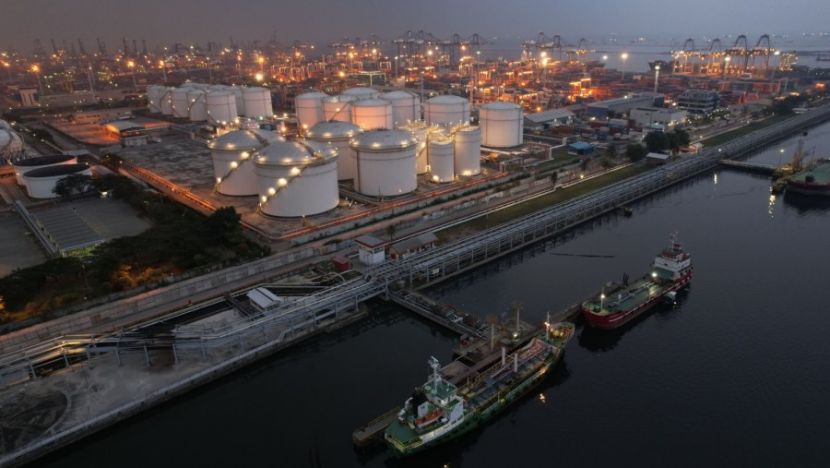
 A senior figure in Indonesia's oil and gas industry estimated that to increase the country's crude oil reserves from the current 20 days to the international standard of 90 days, 56 new crude oil storage tanks are needed, each with a capacity of 2 million barrels. Based on national daily fuel consumption of 1.6 million barrels, an additional 70 days of reserves would require new storage capacity of about 112 million barrels, corresponding to 56 tanks of 2 million barrels each. He estimated that the total investment for building these tanks would be approximately 378.65 trillion rupiah (US$22.4 billion), with a single tank costing about US$400 million, and construction expected to take 36 months.
If leasing storage tanks, the daily rental for a 2 million barrel tank is about US$200,000 (33.8 billion rupiah), and for 56 tanks the daily rental would total about US$11.2 million (1.893 trillion rupiah), with an annual rent of about US$4.08 billion (68.97 trillion rupiah). Currently, Indonesia's crude oil and fuel reserves stand at only 20-23 days, with a maximum design capacity of 25 days, which is below the International Energy Agency (IEA) standard of at least 90 days of net imports.
However, officials stated that the 23 days represent operational inventory, which is sufficient to meet operational needs under continuous imports and domestic production. According to a 2020 regulation from the downstream oil and gas regulator, companies must maintain a minimum of 23 days of operational reserves. The Minister of Energy and Mineral Resources said that Indonesia urgently needs new crude oil storage tanks to strengthen energy security, especially given the current shipping disruptions in the Strait of Hormuz, making it more critical to ensure stable supply to domestic refineries. The project is planned to be jointly invested by domestic and foreign private capital (excluding U.S. funds), and investors have been identified.
A senior figure in Indonesia's oil and gas industry estimated that to increase the country's crude oil reserves from the current 20 days to the international standard of 90 days, 56 new crude oil storage tanks are needed, each with a capacity of 2 million barrels. Based on national daily fuel consumption of 1.6 million barrels, an additional 70 days of reserves would require new storage capacity of about 112 million barrels, corresponding to 56 tanks of 2 million barrels each. He estimated that the total investment for building these tanks would be approximately 378.65 trillion rupiah (US$22.4 billion), with a single tank costing about US$400 million, and construction expected to take 36 months.
If leasing storage tanks, the daily rental for a 2 million barrel tank is about US$200,000 (33.8 billion rupiah), and for 56 tanks the daily rental would total about US$11.2 million (1.893 trillion rupiah), with an annual rent of about US$4.08 billion (68.97 trillion rupiah). Currently, Indonesia's crude oil and fuel reserves stand at only 20-23 days, with a maximum design capacity of 25 days, which is below the International Energy Agency (IEA) standard of at least 90 days of net imports.
However, officials stated that the 23 days represent operational inventory, which is sufficient to meet operational needs under continuous imports and domestic production. According to a 2020 regulation from the downstream oil and gas regulator, companies must maintain a minimum of 23 days of operational reserves. The Minister of Energy and Mineral Resources said that Indonesia urgently needs new crude oil storage tanks to strengthen energy security, especially given the current shipping disruptions in the Strait of Hormuz, making it more critical to ensure stable supply to domestic refineries. The project is planned to be jointly invested by domestic and foreign private capital (excluding U.S. funds), and investors have been identified.
社会动态
Indonesia's Crude Oil Reserves Only Support 23 Days; Needs 56 New Storage Tanks to Meet International Standards
A senior figure in Indonesia's oil and gas industry estimated that to increase the country's crude oil reserves from the current 20 days to the international standard of 90 days, 56 new crude oil storage tanks are needed, each with a capacity of 2 million barrels. Based on national daily fuel consumption of 1.6 million barrels, an additional 70 days of reserves would require new storage capacity of about 112 million barrels, corresponding to 56 tanks of 2 million barrels each. He estimated that the total investment for building these tanks would be approximately 378.65 trillion rupiah (US$22.4 billion), with a single tank costing about US$400 million, and construction expected to take 36 months.
If leasing storage tanks, the daily rental for a 2 million barrel tank is about US$200,000 (33.8 billion rupiah), and for 56 tanks the daily rental would total about US$11.2 million (1.893 trillion rupiah), with an annual rent of about US$4.08 billion (68.97 trillion rupiah). Currently, Indonesia's crude oil and fuel reserves stand at only 20-23 days, with a maximum design capacity of 25 days, which is below the International Energy Agency (IEA) standard of at least 90 days of net imports.
However, officials stated that the 23 days represent operational inventory, which is sufficient to meet operational needs under continuous imports and domestic production. According to a 2020 regulation from the downstream oil and gas regulator, companies must maintain a minimum of 23 days of operational reserves. The Minister of Energy and Mineral Resources said that Indonesia urgently needs new crude oil storage tanks to strengthen energy security, especially given the current shipping disruptions in the Strait of Hormuz, making it more critical to ensure stable supply to domestic refineries. The project is planned to be jointly invested by domestic and foreign private capital (excluding U.S. funds), and investors have been identified.