


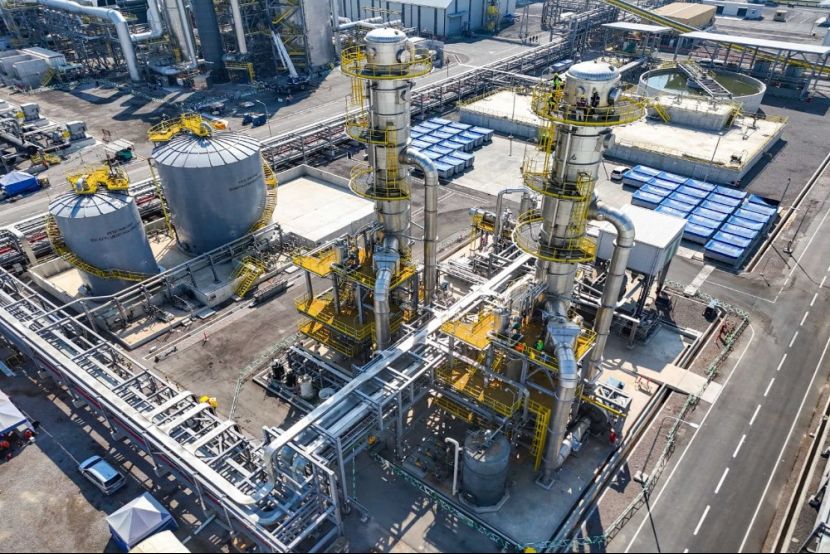
 Indonesian government data shows a positive trend in special economic zone (SEZ) development, with cumulative investment reaching IDR 335 trillion as of 2025, creating 248,459 jobs. In 2025, actual investment across the country's 25 SEZs reached IDR 82.5 trillion, achieving 98% of the government's target, with IDR 21 trillion added in the fourth quarter alone, demonstrating stable growth. SEZ exports in 2025 reached IDR 43.95 trillion, a surge of IDR 21.93 trillion compared to the previous year.
Export growth was driven by high-value-added sectors focused on domestic deep processing, with key contributing products including smelter-grade alumina from the Galang Batang SEZ, oleochemicals from the Sei Mangkei SEZ, anode materials from the Kendal SEZ, and copper processed products from the Gresik SEZ. Despite the positive development, the government is focusing on several strategic issues, including accelerating approval processes in environmental, labor, and health sectors, and optimizing fiscal and tax incentive policies.
In accordance with government regulations, optimizing risk-based business licensing procedures and improving ease of doing business are listed as evaluation priorities. In the labor sector, the Ministry of Manpower is responsible for protecting workers' rights, the Immigration Office is improving selective management mechanisms for foreign workers, and the Ministry of Investment and Downstream Industry continues to promote absorption of local labor in the industrial sector. The acting secretary of the National SEZ Council stated that SEZs will continue to help Indonesia achieve strong, inclusive, and sustainable national economic growth by accelerating industrialization, increasing industrial added value, and strengthening local economic structures, supporting Indonesia's target of 8% economic growth.
Indonesian government data shows a positive trend in special economic zone (SEZ) development, with cumulative investment reaching IDR 335 trillion as of 2025, creating 248,459 jobs. In 2025, actual investment across the country's 25 SEZs reached IDR 82.5 trillion, achieving 98% of the government's target, with IDR 21 trillion added in the fourth quarter alone, demonstrating stable growth. SEZ exports in 2025 reached IDR 43.95 trillion, a surge of IDR 21.93 trillion compared to the previous year.
Export growth was driven by high-value-added sectors focused on domestic deep processing, with key contributing products including smelter-grade alumina from the Galang Batang SEZ, oleochemicals from the Sei Mangkei SEZ, anode materials from the Kendal SEZ, and copper processed products from the Gresik SEZ. Despite the positive development, the government is focusing on several strategic issues, including accelerating approval processes in environmental, labor, and health sectors, and optimizing fiscal and tax incentive policies.
In accordance with government regulations, optimizing risk-based business licensing procedures and improving ease of doing business are listed as evaluation priorities. In the labor sector, the Ministry of Manpower is responsible for protecting workers' rights, the Immigration Office is improving selective management mechanisms for foreign workers, and the Ministry of Investment and Downstream Industry continues to promote absorption of local labor in the industrial sector. The acting secretary of the National SEZ Council stated that SEZs will continue to help Indonesia achieve strong, inclusive, and sustainable national economic growth by accelerating industrialization, increasing industrial added value, and strengthening local economic structures, supporting Indonesia's target of 8% economic growth.
Indonesian government data shows a positive trend in special economic zone (SEZ) development, with cumulative investment reaching IDR 335 trillion as of 2025, creating 248,459 jobs. In 2025, actual investment across the country's 25 SEZs reached IDR 82.5 trillion, achieving 98% of the government's target, with IDR 21 trillion added in the fourth quarter alone, demonstrating stable growth. SEZ exports in 2025 reached IDR 43.95 trillion, a surge of IDR 21.93 trillion compared to the previous year.
Export growth was driven by high-value-added sectors focused on domestic deep processing, with key contributing products including smelter-grade alumina from the Galang Batang SEZ, oleochemicals from the Sei Mangkei SEZ, anode materials from the Kendal SEZ, and copper processed products from the Gresik SEZ. Despite the positive development, the government is focusing on several strategic issues, including accelerating approval processes in environmental, labor, and health sectors, and optimizing fiscal and tax incentive policies.
In accordance with government regulations, optimizing risk-based business licensing procedures and improving ease of doing business are listed as evaluation priorities. In the labor sector, the Ministry of Manpower is responsible for protecting workers' rights, the Immigration Office is improving selective management mechanisms for foreign workers, and the Ministry of Investment and Downstream Industry continues to promote absorption of local labor in the industrial sector. The acting secretary of the National SEZ Council stated that SEZs will continue to help Indonesia achieve strong, inclusive, and sustainable national economic growth by accelerating industrialization, increasing industrial added value, and strengthening local economic structures, supporting Indonesia's target of 8% economic growth.
Indonesian government data shows a positive trend in special economic zone (SEZ) development, with cumulative investment reaching IDR 335 trillion as of 2025, creating 248,459 jobs. In 2025, actual investment across the country's 25 SEZs reached IDR 82.5 trillion, achieving 98% of the government's target, with IDR 21 trillion added in the fourth quarter alone, demonstrating stable growth. SEZ exports in 2025 reached IDR 43.95 trillion, a surge of IDR 21.93 trillion compared to the previous year.
Export growth was driven by high-value-added sectors focused on domestic deep processing, with key contributing products including smelter-grade alumina from the Galang Batang SEZ, oleochemicals from the Sei Mangkei SEZ, anode materials from the Kendal SEZ, and copper processed products from the Gresik SEZ. Despite the positive development, the government is focusing on several strategic issues, including accelerating approval processes in environmental, labor, and health sectors, and optimizing fiscal and tax incentive policies.
In accordance with government regulations, optimizing risk-based business licensing procedures and improving ease of doing business are listed as evaluation priorities. In the labor sector, the Ministry of Manpower is responsible for protecting workers' rights, the Immigration Office is improving selective management mechanisms for foreign workers, and the Ministry of Investment and Downstream Industry continues to promote absorption of local labor in the industrial sector. The acting secretary of the National SEZ Council stated that SEZs will continue to help Indonesia achieve strong, inclusive, and sustainable national economic growth by accelerating industrialization, increasing industrial added value, and strengthening local economic structures, supporting Indonesia's target of 8% economic growth.