


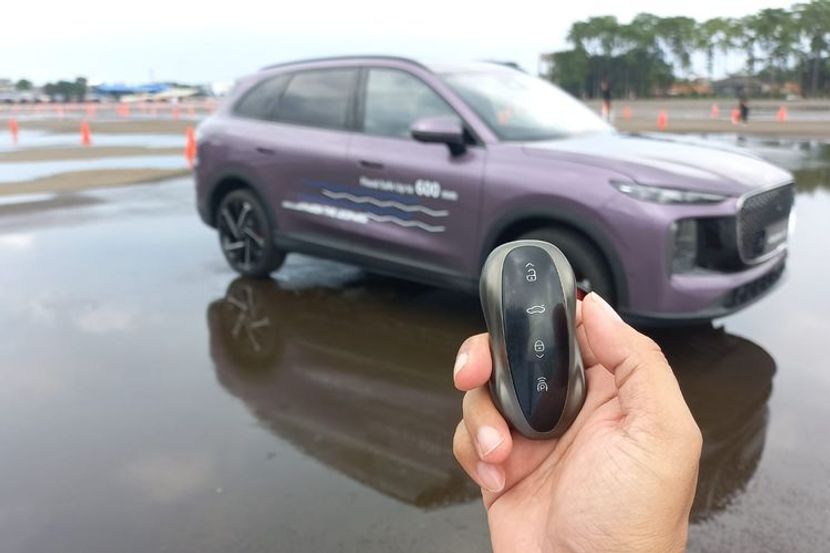
 The Chinese government recently issued new regulations requiring domestically produced cars to be equipped with automatic emergency braking and steer-by-wire as standard, and this standard will also apply to the Indonesian market. The Product Development Manager of Lepas Indonesia stated that such new technologies are currently costly in nature and are essentially industrial investments. However, with market scale expansion and technological development, related costs will inevitably decrease gradually, which is a normal reflection of supply and demand in economic laws. Any initial investment in technology is an investment, and subsequent cost reductions will follow as technology iterates.
He pointed out that the certified automotive regulations in China themselves already have global standards, and Indonesia's automotive regulatory system is aligned with UN standards, so the technical standards promoted in China and globally can essentially already be complied with in Indonesia. It only needs to be confirmed whether the relevant technical systems are suitable for Indonesia's local environment, such as adaptability issues related to environmental noise. He emphasized that the various automotive technologies to be implemented in Indonesia in the future will not only follow global unified standards but will also undergo localized adjustments based on Indonesia's road conditions, natural environment, and local driving habits, ensuring that technology application complies with international norms while being adapted to Indonesia's actual usage scenarios.
The Chinese government recently issued new regulations requiring domestically produced cars to be equipped with automatic emergency braking and steer-by-wire as standard, and this standard will also apply to the Indonesian market. The Product Development Manager of Lepas Indonesia stated that such new technologies are currently costly in nature and are essentially industrial investments. However, with market scale expansion and technological development, related costs will inevitably decrease gradually, which is a normal reflection of supply and demand in economic laws. Any initial investment in technology is an investment, and subsequent cost reductions will follow as technology iterates.
He pointed out that the certified automotive regulations in China themselves already have global standards, and Indonesia's automotive regulatory system is aligned with UN standards, so the technical standards promoted in China and globally can essentially already be complied with in Indonesia. It only needs to be confirmed whether the relevant technical systems are suitable for Indonesia's local environment, such as adaptability issues related to environmental noise. He emphasized that the various automotive technologies to be implemented in Indonesia in the future will not only follow global unified standards but will also undergo localized adjustments based on Indonesia's road conditions, natural environment, and local driving habits, ensuring that technology application complies with international norms while being adapted to Indonesia's actual usage scenarios.
The Chinese government recently issued new regulations requiring domestically produced cars to be equipped with automatic emergency braking and steer-by-wire as standard, and this standard will also apply to the Indonesian market. The Product Development Manager of Lepas Indonesia stated that such new technologies are currently costly in nature and are essentially industrial investments. However, with market scale expansion and technological development, related costs will inevitably decrease gradually, which is a normal reflection of supply and demand in economic laws. Any initial investment in technology is an investment, and subsequent cost reductions will follow as technology iterates.
He pointed out that the certified automotive regulations in China themselves already have global standards, and Indonesia's automotive regulatory system is aligned with UN standards, so the technical standards promoted in China and globally can essentially already be complied with in Indonesia. It only needs to be confirmed whether the relevant technical systems are suitable for Indonesia's local environment, such as adaptability issues related to environmental noise. He emphasized that the various automotive technologies to be implemented in Indonesia in the future will not only follow global unified standards but will also undergo localized adjustments based on Indonesia's road conditions, natural environment, and local driving habits, ensuring that technology application complies with international norms while being adapted to Indonesia's actual usage scenarios.
The Chinese government recently issued new regulations requiring domestically produced cars to be equipped with automatic emergency braking and steer-by-wire as standard, and this standard will also apply to the Indonesian market. The Product Development Manager of Lepas Indonesia stated that such new technologies are currently costly in nature and are essentially industrial investments. However, with market scale expansion and technological development, related costs will inevitably decrease gradually, which is a normal reflection of supply and demand in economic laws. Any initial investment in technology is an investment, and subsequent cost reductions will follow as technology iterates.
He pointed out that the certified automotive regulations in China themselves already have global standards, and Indonesia's automotive regulatory system is aligned with UN standards, so the technical standards promoted in China and globally can essentially already be complied with in Indonesia. It only needs to be confirmed whether the relevant technical systems are suitable for Indonesia's local environment, such as adaptability issues related to environmental noise. He emphasized that the various automotive technologies to be implemented in Indonesia in the future will not only follow global unified standards but will also undergo localized adjustments based on Indonesia's road conditions, natural environment, and local driving habits, ensuring that technology application complies with international norms while being adapted to Indonesia's actual usage scenarios.