


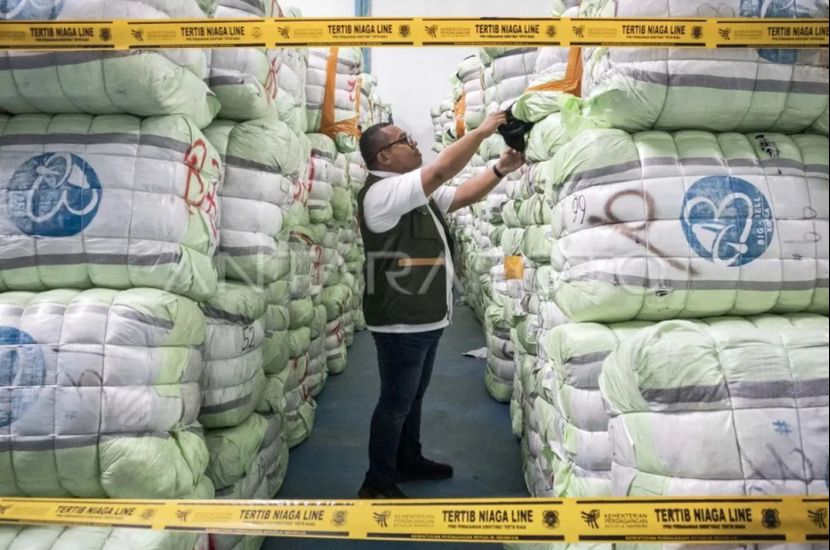
 The Minister of Cooperatives and SMEs recently claimed that Chinese imported goods are a 'terrible ghost' for the development of Indonesian MSMEs. He stated in a parliamentary hearing that if the domestic market continues to be flooded with cheap imported goods, various government support and intervention policies will become ineffective; and the practice of under-invoicing and selling unbranded white-label products under local brands after entry further squeezes the living space of local MSMEs.
He cited examples such as underwear, headscarves, and batik cloth, which can be produced locally, but the production costs of local MSMEs are on par with the selling prices of Chinese imported goods, leading to severe lack of competitiveness. The once globally renowned Purballingga false eyelash industrial cluster has also declined due to the impact of cheap Chinese imports. He emphasized that the government is not opposed to imports, but advocates for restricting goods that can already be produced locally.
Currently, the Ministry of Cooperatives and SMEs has reached an agreement with the Ministry of Trade to first implement import restrictions on 10 categories of MSME products. The selection criteria are products with high public demand and deep involvement of MSMEs in production.
Rectifying the market and restricting related imports requires cross-departmental coordination, involving at least the Ministry of Industry, Ministry of Trade, Ministry of Cooperatives and SMEs, and Ministry of Finance, which are responsible for technical aspects, import/export execution, protection of MSME rights, and fiscal matters respectively. Addressing the impact of imported goods is considered the fundamental solution to the problem.
The Minister of Cooperatives and SMEs recently claimed that Chinese imported goods are a 'terrible ghost' for the development of Indonesian MSMEs. He stated in a parliamentary hearing that if the domestic market continues to be flooded with cheap imported goods, various government support and intervention policies will become ineffective; and the practice of under-invoicing and selling unbranded white-label products under local brands after entry further squeezes the living space of local MSMEs.
He cited examples such as underwear, headscarves, and batik cloth, which can be produced locally, but the production costs of local MSMEs are on par with the selling prices of Chinese imported goods, leading to severe lack of competitiveness. The once globally renowned Purballingga false eyelash industrial cluster has also declined due to the impact of cheap Chinese imports. He emphasized that the government is not opposed to imports, but advocates for restricting goods that can already be produced locally.
Currently, the Ministry of Cooperatives and SMEs has reached an agreement with the Ministry of Trade to first implement import restrictions on 10 categories of MSME products. The selection criteria are products with high public demand and deep involvement of MSMEs in production.
Rectifying the market and restricting related imports requires cross-departmental coordination, involving at least the Ministry of Industry, Ministry of Trade, Ministry of Cooperatives and SMEs, and Ministry of Finance, which are responsible for technical aspects, import/export execution, protection of MSME rights, and fiscal matters respectively. Addressing the impact of imported goods is considered the fundamental solution to the problem.
The Minister of Cooperatives and SMEs recently claimed that Chinese imported goods are a 'terrible ghost' for the development of Indonesian MSMEs. He stated in a parliamentary hearing that if the domestic market continues to be flooded with cheap imported goods, various government support and intervention policies will become ineffective; and the practice of under-invoicing and selling unbranded white-label products under local brands after entry further squeezes the living space of local MSMEs.
He cited examples such as underwear, headscarves, and batik cloth, which can be produced locally, but the production costs of local MSMEs are on par with the selling prices of Chinese imported goods, leading to severe lack of competitiveness. The once globally renowned Purballingga false eyelash industrial cluster has also declined due to the impact of cheap Chinese imports. He emphasized that the government is not opposed to imports, but advocates for restricting goods that can already be produced locally.
Currently, the Ministry of Cooperatives and SMEs has reached an agreement with the Ministry of Trade to first implement import restrictions on 10 categories of MSME products. The selection criteria are products with high public demand and deep involvement of MSMEs in production.
Rectifying the market and restricting related imports requires cross-departmental coordination, involving at least the Ministry of Industry, Ministry of Trade, Ministry of Cooperatives and SMEs, and Ministry of Finance, which are responsible for technical aspects, import/export execution, protection of MSME rights, and fiscal matters respectively. Addressing the impact of imported goods is considered the fundamental solution to the problem.
The Minister of Cooperatives and SMEs recently claimed that Chinese imported goods are a 'terrible ghost' for the development of Indonesian MSMEs. He stated in a parliamentary hearing that if the domestic market continues to be flooded with cheap imported goods, various government support and intervention policies will become ineffective; and the practice of under-invoicing and selling unbranded white-label products under local brands after entry further squeezes the living space of local MSMEs.
He cited examples such as underwear, headscarves, and batik cloth, which can be produced locally, but the production costs of local MSMEs are on par with the selling prices of Chinese imported goods, leading to severe lack of competitiveness. The once globally renowned Purballingga false eyelash industrial cluster has also declined due to the impact of cheap Chinese imports. He emphasized that the government is not opposed to imports, but advocates for restricting goods that can already be produced locally.
Currently, the Ministry of Cooperatives and SMEs has reached an agreement with the Ministry of Trade to first implement import restrictions on 10 categories of MSME products. The selection criteria are products with high public demand and deep involvement of MSMEs in production.
Rectifying the market and restricting related imports requires cross-departmental coordination, involving at least the Ministry of Industry, Ministry of Trade, Ministry of Cooperatives and SMEs, and Ministry of Finance, which are responsible for technical aspects, import/export execution, protection of MSME rights, and fiscal matters respectively. Addressing the impact of imported goods is considered the fundamental solution to the problem.