


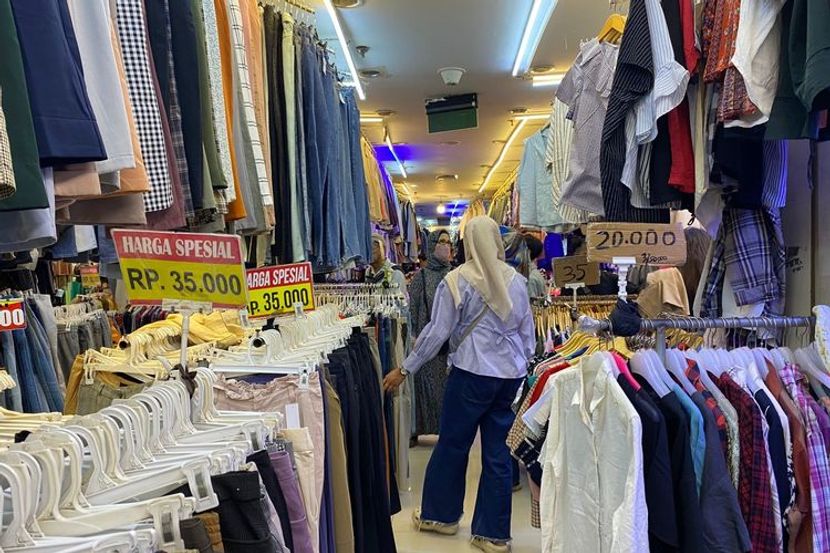
 Regarding the issue of used clothing (thrifting) imports, the Finance Minister recently reiterated that the government will continue to crack down on illegal imports and rejected proposals to legalize such imports through taxation, emphasizing that the key lies in the legality of goods rather than taxes. However, public opinion questions whether current enforcement reaches the source, instead endangering the livelihoods of small traders at the grassroots level.
Indonesia has long had regulations restricting the import of used clothing to protect consumer health and safety, and the 2020 Job Creation Law further strengthened related controls. However, enforcement often targets small traders in traditional markets, who only purchase goods from suppliers rather than directly engaging in imports, while upstream importers are not effectively held accountable, violating the principle of administrative proportionality.
Many small traders are unclear about legal boundaries, health standards, or mechanisms for lawful trade, operating in a gray area, which contradicts the requirement for legal clarity of goods under the Consumer Protection Law, making them victims of uncertainty instead. For the many traders who rely on thrifting to support their families and consumers seeking affordable clothing, a one-size-fits-all enforcement approach risks widening the gap between the government and the people, neglecting the socio-economic impact of the policy.
Public opinion suggests that enforcement should target upstream importers, develop feasible hygiene standards and certification mechanisms for used clothing, and provide transition and education arrangements to help small traders gradually adjust. Only by balancing legality with protection for small groups can policies maintain order while reflecting social justice.
Regarding the issue of used clothing (thrifting) imports, the Finance Minister recently reiterated that the government will continue to crack down on illegal imports and rejected proposals to legalize such imports through taxation, emphasizing that the key lies in the legality of goods rather than taxes. However, public opinion questions whether current enforcement reaches the source, instead endangering the livelihoods of small traders at the grassroots level.
Indonesia has long had regulations restricting the import of used clothing to protect consumer health and safety, and the 2020 Job Creation Law further strengthened related controls. However, enforcement often targets small traders in traditional markets, who only purchase goods from suppliers rather than directly engaging in imports, while upstream importers are not effectively held accountable, violating the principle of administrative proportionality.
Many small traders are unclear about legal boundaries, health standards, or mechanisms for lawful trade, operating in a gray area, which contradicts the requirement for legal clarity of goods under the Consumer Protection Law, making them victims of uncertainty instead. For the many traders who rely on thrifting to support their families and consumers seeking affordable clothing, a one-size-fits-all enforcement approach risks widening the gap between the government and the people, neglecting the socio-economic impact of the policy.
Public opinion suggests that enforcement should target upstream importers, develop feasible hygiene standards and certification mechanisms for used clothing, and provide transition and education arrangements to help small traders gradually adjust. Only by balancing legality with protection for small groups can policies maintain order while reflecting social justice.
Regarding the issue of used clothing (thrifting) imports, the Finance Minister recently reiterated that the government will continue to crack down on illegal imports and rejected proposals to legalize such imports through taxation, emphasizing that the key lies in the legality of goods rather than taxes. However, public opinion questions whether current enforcement reaches the source, instead endangering the livelihoods of small traders at the grassroots level.
Indonesia has long had regulations restricting the import of used clothing to protect consumer health and safety, and the 2020 Job Creation Law further strengthened related controls. However, enforcement often targets small traders in traditional markets, who only purchase goods from suppliers rather than directly engaging in imports, while upstream importers are not effectively held accountable, violating the principle of administrative proportionality.
Many small traders are unclear about legal boundaries, health standards, or mechanisms for lawful trade, operating in a gray area, which contradicts the requirement for legal clarity of goods under the Consumer Protection Law, making them victims of uncertainty instead. For the many traders who rely on thrifting to support their families and consumers seeking affordable clothing, a one-size-fits-all enforcement approach risks widening the gap between the government and the people, neglecting the socio-economic impact of the policy.
Public opinion suggests that enforcement should target upstream importers, develop feasible hygiene standards and certification mechanisms for used clothing, and provide transition and education arrangements to help small traders gradually adjust. Only by balancing legality with protection for small groups can policies maintain order while reflecting social justice.
Regarding the issue of used clothing (thrifting) imports, the Finance Minister recently reiterated that the government will continue to crack down on illegal imports and rejected proposals to legalize such imports through taxation, emphasizing that the key lies in the legality of goods rather than taxes. However, public opinion questions whether current enforcement reaches the source, instead endangering the livelihoods of small traders at the grassroots level.
Indonesia has long had regulations restricting the import of used clothing to protect consumer health and safety, and the 2020 Job Creation Law further strengthened related controls. However, enforcement often targets small traders in traditional markets, who only purchase goods from suppliers rather than directly engaging in imports, while upstream importers are not effectively held accountable, violating the principle of administrative proportionality.
Many small traders are unclear about legal boundaries, health standards, or mechanisms for lawful trade, operating in a gray area, which contradicts the requirement for legal clarity of goods under the Consumer Protection Law, making them victims of uncertainty instead. For the many traders who rely on thrifting to support their families and consumers seeking affordable clothing, a one-size-fits-all enforcement approach risks widening the gap between the government and the people, neglecting the socio-economic impact of the policy.
Public opinion suggests that enforcement should target upstream importers, develop feasible hygiene standards and certification mechanisms for used clothing, and provide transition and education arrangements to help small traders gradually adjust. Only by balancing legality with protection for small groups can policies maintain order while reflecting social justice.