


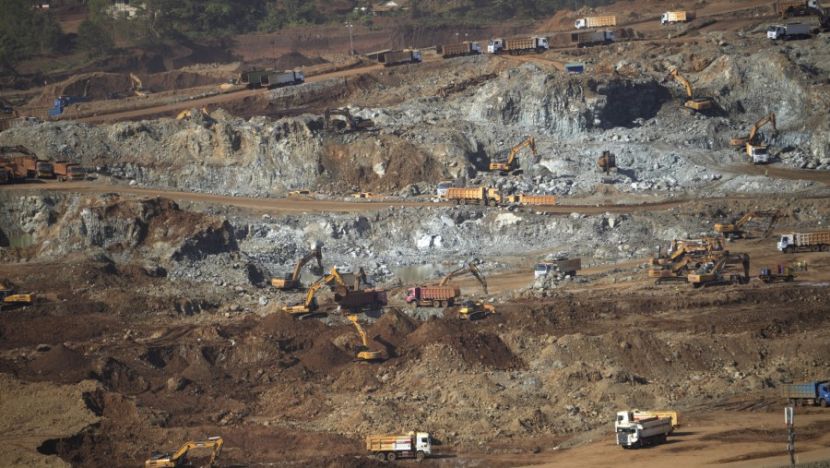
 The Ministry of Energy and Mineral Resources supports the Ministry of Industry's policy to restrict investment permits and Industrial Business Licenses (IUI) for new nickel smelters, as global and domestic nickel supply has become oversupplied. The ESDM Minister stated that the 2026 nickel production target and quota will be adjusted, with output potentially dropping from 319 million tons in 2025 to below 300 million tons.
The Ministry of Industry's new regulation prohibits new independent smelters from producing intermediate products (such as nickel matte, MHP, ferronickel, and nickel pig iron), requiring a shift toward downstream products (such as electrolytic nickel, nickel sulfate, and nickel chloride). However, smelters already under construction may still produce intermediate products. Currently, Indonesia has 147 nickel smelting projects with a total ore demand of 735.2 million tons.
The approved RKAB quota for 2025 is 364 million tons, an increase from 2023. ESDM data shows that the nickel ore production target for this year is 220 million tons, lower than last year's target of 240 million tons. Indonesia has 44 operating smelters (mainly in North Maluku), 19 projects under construction, and 7 projects in the feasibility study stage.
The government emphasizes that downstreaming should go beyond secondary products and shift toward high-value-added products to align with the 2025-2035 National Industrial Plan.
The Ministry of Energy and Mineral Resources supports the Ministry of Industry's policy to restrict investment permits and Industrial Business Licenses (IUI) for new nickel smelters, as global and domestic nickel supply has become oversupplied. The ESDM Minister stated that the 2026 nickel production target and quota will be adjusted, with output potentially dropping from 319 million tons in 2025 to below 300 million tons.
The Ministry of Industry's new regulation prohibits new independent smelters from producing intermediate products (such as nickel matte, MHP, ferronickel, and nickel pig iron), requiring a shift toward downstream products (such as electrolytic nickel, nickel sulfate, and nickel chloride). However, smelters already under construction may still produce intermediate products. Currently, Indonesia has 147 nickel smelting projects with a total ore demand of 735.2 million tons.
The approved RKAB quota for 2025 is 364 million tons, an increase from 2023. ESDM data shows that the nickel ore production target for this year is 220 million tons, lower than last year's target of 240 million tons. Indonesia has 44 operating smelters (mainly in North Maluku), 19 projects under construction, and 7 projects in the feasibility study stage.
The government emphasizes that downstreaming should go beyond secondary products and shift toward high-value-added products to align with the 2025-2035 National Industrial Plan.
The Ministry of Energy and Mineral Resources supports the Ministry of Industry's policy to restrict investment permits and Industrial Business Licenses (IUI) for new nickel smelters, as global and domestic nickel supply has become oversupplied. The ESDM Minister stated that the 2026 nickel production target and quota will be adjusted, with output potentially dropping from 319 million tons in 2025 to below 300 million tons.
The Ministry of Industry's new regulation prohibits new independent smelters from producing intermediate products (such as nickel matte, MHP, ferronickel, and nickel pig iron), requiring a shift toward downstream products (such as electrolytic nickel, nickel sulfate, and nickel chloride). However, smelters already under construction may still produce intermediate products. Currently, Indonesia has 147 nickel smelting projects with a total ore demand of 735.2 million tons.
The approved RKAB quota for 2025 is 364 million tons, an increase from 2023. ESDM data shows that the nickel ore production target for this year is 220 million tons, lower than last year's target of 240 million tons. Indonesia has 44 operating smelters (mainly in North Maluku), 19 projects under construction, and 7 projects in the feasibility study stage.
The government emphasizes that downstreaming should go beyond secondary products and shift toward high-value-added products to align with the 2025-2035 National Industrial Plan.
The Ministry of Energy and Mineral Resources supports the Ministry of Industry's policy to restrict investment permits and Industrial Business Licenses (IUI) for new nickel smelters, as global and domestic nickel supply has become oversupplied. The ESDM Minister stated that the 2026 nickel production target and quota will be adjusted, with output potentially dropping from 319 million tons in 2025 to below 300 million tons.
The Ministry of Industry's new regulation prohibits new independent smelters from producing intermediate products (such as nickel matte, MHP, ferronickel, and nickel pig iron), requiring a shift toward downstream products (such as electrolytic nickel, nickel sulfate, and nickel chloride). However, smelters already under construction may still produce intermediate products. Currently, Indonesia has 147 nickel smelting projects with a total ore demand of 735.2 million tons.
The approved RKAB quota for 2025 is 364 million tons, an increase from 2023. ESDM data shows that the nickel ore production target for this year is 220 million tons, lower than last year's target of 240 million tons. Indonesia has 44 operating smelters (mainly in North Maluku), 19 projects under construction, and 7 projects in the feasibility study stage.
The government emphasizes that downstreaming should go beyond secondary products and shift toward high-value-added products to align with the 2025-2035 National Industrial Plan.