


 When a venture capitalist first visited Indonesia from China in 2015, he was deeply impressed by the local regulator's strong interest in Alipay. In 2021, he co-founded Yup, an online payment app similar to Alipay, primarily serving Indonesia's salaried workers—a group that often struggles to get adequate services from local banks. He described Indonesia as a highly attractive place for startups, as it is a large emerging market with a moderate distance from China and extremely high smartphone penetration. He is just one of many Chinese nationals working and starting businesses in Indonesia. Indonesia is the world's fourth most populous country, with a population of 290 million. Data from the Indonesian Ministry of Manpower shows that in 2024, Indonesia issued over 100,000 residence permits to Chinese citizens—more than double the total for all other nationalities combined, and a sharp increase from 80,000 in 2023. One Chinese Indonesian businessman noted that the actual number is even higher, as many Chinese initially enter on tourist visas and gradually build their businesses.
New Chinese entrepreneurs in Indonesia run a variety of businesses, from restaurants and escape rooms to real estate companies and language schools. Many models are directly copied from China, as entrepreneurs hope to avoid the economic slowdown and fierce competition back home. Among them, the Yup payment app has been particularly successful, with over 2 million active accounts, completing six rounds of funding exceeding $100 million, and approaching breakeven. The company's customer service operations are based in Jakarta, with its R&D center in Shanghai, and he plans to expand the business to other Southeast Asian countries in the coming years. Well-known Chinese brands are also expanding rapidly in Indonesia. A few years ago, Chinese electric vehicles were rarely seen on the streets of Jakarta; now they are everywhere. In the first half of 2025, Chinese brands accounted for over 90% of EV sales in Indonesia. BYD has invested over $1 billion to build a factory in West Java with an annual production capacity of 150,000 vehicles. GAC Aion, Xiaopeng, Wuling and others have already achieved local production. A Chinese businessman working for an Indonesian company said that today's Indonesia is just like China in the 1980s, full of development opportunities.
One of the key reasons Indonesia attracts EV manufacturers is its possession of the world's largest nickel reserves, a key raw material for making some EV batteries. Chinese companies already control three-quarters of Indonesia's nickel refining capacity and have built related infrastructure to process nickel into power batteries. The world's largest battery maker, CATL, is building an integrated battery factory in West Java, while Huayou Cobalt has replaced South Korea's LG as the main partner for another battery project. The total investment from Chinese parties in these two projects is nearly $10 billion.
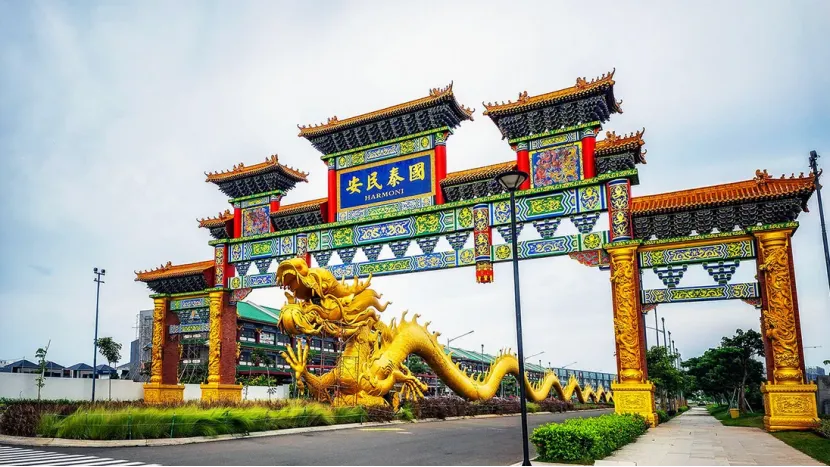
PIK, a new town built on reclaimed land in North Jakarta, has become a popular settlement for new Chinese immigrants. The area, roughly two-thirds the size of Manhattan, features high-end apartments and shopping malls housing many Chinese brands, including Tan Fish, Haidilao, and Mixue Ice Cream & Tea. Mixue Ice Cream & Tea has 2,600 stores in Indonesia, making it the brand's largest market outside China.
However, some Chinese Indonesians are hesitant to live in PIK, still recalling the 1998 anti-Chinese riots in which hundreds of Chinese Indonesians were killed, and worry that the area could become a target if similar events occur again. The incoming Chinese entrepreneurs are optimistic about Indonesia's future, while the Chinese Indonesian minority prays that history will not repeat itself.
When a venture capitalist first visited Indonesia from China in 2015, he was deeply impressed by the local regulator's strong interest in Alipay. In 2021, he co-founded Yup, an online payment app similar to Alipay, primarily serving Indonesia's salaried workers—a group that often struggles to get adequate services from local banks. He described Indonesia as a highly attractive place for startups, as it is a large emerging market with a moderate distance from China and extremely high smartphone penetration. He is just one of many Chinese nationals working and starting businesses in Indonesia. Indonesia is the world's fourth most populous country, with a population of 290 million. Data from the Indonesian Ministry of Manpower shows that in 2024, Indonesia issued over 100,000 residence permits to Chinese citizens—more than double the total for all other nationalities combined, and a sharp increase from 80,000 in 2023. One Chinese Indonesian businessman noted that the actual number is even higher, as many Chinese initially enter on tourist visas and gradually build their businesses.
New Chinese entrepreneurs in Indonesia run a variety of businesses, from restaurants and escape rooms to real estate companies and language schools. Many models are directly copied from China, as entrepreneurs hope to avoid the economic slowdown and fierce competition back home. Among them, the Yup payment app has been particularly successful, with over 2 million active accounts, completing six rounds of funding exceeding $100 million, and approaching breakeven. The company's customer service operations are based in Jakarta, with its R&D center in Shanghai, and he plans to expand the business to other Southeast Asian countries in the coming years. Well-known Chinese brands are also expanding rapidly in Indonesia. A few years ago, Chinese electric vehicles were rarely seen on the streets of Jakarta; now they are everywhere. In the first half of 2025, Chinese brands accounted for over 90% of EV sales in Indonesia. BYD has invested over $1 billion to build a factory in West Java with an annual production capacity of 150,000 vehicles. GAC Aion, Xiaopeng, Wuling and others have already achieved local production. A Chinese businessman working for an Indonesian company said that today's Indonesia is just like China in the 1980s, full of development opportunities.
One of the key reasons Indonesia attracts EV manufacturers is its possession of the world's largest nickel reserves, a key raw material for making some EV batteries. Chinese companies already control three-quarters of Indonesia's nickel refining capacity and have built related infrastructure to process nickel into power batteries. The world's largest battery maker, CATL, is building an integrated battery factory in West Java, while Huayou Cobalt has replaced South Korea's LG as the main partner for another battery project. The total investment from Chinese parties in these two projects is nearly $10 billion.
PIK, a new town built on reclaimed land in North Jakarta, has become a popular settlement for new Chinese immigrants. The area, roughly two-thirds the size of Manhattan, features high-end apartments and shopping malls housing many Chinese brands, including Tan Fish, Haidilao, and Mixue Ice Cream & Tea. Mixue Ice Cream & Tea has 2,600 stores in Indonesia, making it the brand's largest market outside China.
However, some Chinese Indonesians are hesitant to live in PIK, still recalling the 1998 anti-Chinese riots in which hundreds of Chinese Indonesians were killed, and worry that the area could become a target if similar events occur again. The incoming Chinese entrepreneurs are optimistic about Indonesia's future, while the Chinese Indonesian minority prays that history will not repeat itself.
When a venture capitalist first visited Indonesia from China in 2015, he was deeply impressed by the local regulator's strong interest in Alipay. In 2021, he co-founded Yup, an online payment app similar to Alipay, primarily serving Indonesia's salaried workers—a group that often struggles to get adequate services from local banks. He described Indonesia as a highly attractive place for startups, as it is a large emerging market with a moderate distance from China and extremely high smartphone penetration. He is just one of many Chinese nationals working and starting businesses in Indonesia. Indonesia is the world's fourth most populous country, with a population of 290 million. Data from the Indonesian Ministry of Manpower shows that in 2024, Indonesia issued over 100,000 residence permits to Chinese citizens—more than double the total for all other nationalities combined, and a sharp increase from 80,000 in 2023. One Chinese Indonesian businessman noted that the actual number is even higher, as many Chinese initially enter on tourist visas and gradually build their businesses.
New Chinese entrepreneurs in Indonesia run a variety of businesses, from restaurants and escape rooms to real estate companies and language schools. Many models are directly copied from China, as entrepreneurs hope to avoid the economic slowdown and fierce competition back home. Among them, the Yup payment app has been particularly successful, with over 2 million active accounts, completing six rounds of funding exceeding $100 million, and approaching breakeven. The company's customer service operations are based in Jakarta, with its R&D center in Shanghai, and he plans to expand the business to other Southeast Asian countries in the coming years. Well-known Chinese brands are also expanding rapidly in Indonesia. A few years ago, Chinese electric vehicles were rarely seen on the streets of Jakarta; now they are everywhere. In the first half of 2025, Chinese brands accounted for over 90% of EV sales in Indonesia. BYD has invested over $1 billion to build a factory in West Java with an annual production capacity of 150,000 vehicles. GAC Aion, Xiaopeng, Wuling and others have already achieved local production. A Chinese businessman working for an Indonesian company said that today's Indonesia is just like China in the 1980s, full of development opportunities.
One of the key reasons Indonesia attracts EV manufacturers is its possession of the world's largest nickel reserves, a key raw material for making some EV batteries. Chinese companies already control three-quarters of Indonesia's nickel refining capacity and have built related infrastructure to process nickel into power batteries. The world's largest battery maker, CATL, is building an integrated battery factory in West Java, while Huayou Cobalt has replaced South Korea's LG as the main partner for another battery project. The total investment from Chinese parties in these two projects is nearly $10 billion.
PIK, a new town built on reclaimed land in North Jakarta, has become a popular settlement for new Chinese immigrants. The area, roughly two-thirds the size of Manhattan, features high-end apartments and shopping malls housing many Chinese brands, including Tan Fish, Haidilao, and Mixue Ice Cream & Tea. Mixue Ice Cream & Tea has 2,600 stores in Indonesia, making it the brand's largest market outside China.
However, some Chinese Indonesians are hesitant to live in PIK, still recalling the 1998 anti-Chinese riots in which hundreds of Chinese Indonesians were killed, and worry that the area could become a target if similar events occur again. The incoming Chinese entrepreneurs are optimistic about Indonesia's future, while the Chinese Indonesian minority prays that history will not repeat itself.
When a venture capitalist first visited Indonesia from China in 2015, he was deeply impressed by the local regulator's strong interest in Alipay. In 2021, he co-founded Yup, an online payment app similar to Alipay, primarily serving Indonesia's salaried workers—a group that often struggles to get adequate services from local banks. He described Indonesia as a highly attractive place for startups, as it is a large emerging market with a moderate distance from China and extremely high smartphone penetration. He is just one of many Chinese nationals working and starting businesses in Indonesia. Indonesia is the world's fourth most populous country, with a population of 290 million. Data from the Indonesian Ministry of Manpower shows that in 2024, Indonesia issued over 100,000 residence permits to Chinese citizens—more than double the total for all other nationalities combined, and a sharp increase from 80,000 in 2023. One Chinese Indonesian businessman noted that the actual number is even higher, as many Chinese initially enter on tourist visas and gradually build their businesses.
New Chinese entrepreneurs in Indonesia run a variety of businesses, from restaurants and escape rooms to real estate companies and language schools. Many models are directly copied from China, as entrepreneurs hope to avoid the economic slowdown and fierce competition back home. Among them, the Yup payment app has been particularly successful, with over 2 million active accounts, completing six rounds of funding exceeding $100 million, and approaching breakeven. The company's customer service operations are based in Jakarta, with its R&D center in Shanghai, and he plans to expand the business to other Southeast Asian countries in the coming years. Well-known Chinese brands are also expanding rapidly in Indonesia. A few years ago, Chinese electric vehicles were rarely seen on the streets of Jakarta; now they are everywhere. In the first half of 2025, Chinese brands accounted for over 90% of EV sales in Indonesia. BYD has invested over $1 billion to build a factory in West Java with an annual production capacity of 150,000 vehicles. GAC Aion, Xiaopeng, Wuling and others have already achieved local production. A Chinese businessman working for an Indonesian company said that today's Indonesia is just like China in the 1980s, full of development opportunities.
One of the key reasons Indonesia attracts EV manufacturers is its possession of the world's largest nickel reserves, a key raw material for making some EV batteries. Chinese companies already control three-quarters of Indonesia's nickel refining capacity and have built related infrastructure to process nickel into power batteries. The world's largest battery maker, CATL, is building an integrated battery factory in West Java, while Huayou Cobalt has replaced South Korea's LG as the main partner for another battery project. The total investment from Chinese parties in these two projects is nearly $10 billion.
PIK, a new town built on reclaimed land in North Jakarta, has become a popular settlement for new Chinese immigrants. The area, roughly two-thirds the size of Manhattan, features high-end apartments and shopping malls housing many Chinese brands, including Tan Fish, Haidilao, and Mixue Ice Cream & Tea. Mixue Ice Cream & Tea has 2,600 stores in Indonesia, making it the brand's largest market outside China.
However, some Chinese Indonesians are hesitant to live in PIK, still recalling the 1998 anti-Chinese riots in which hundreds of Chinese Indonesians were killed, and worry that the area could become a target if similar events occur again. The incoming Chinese entrepreneurs are optimistic about Indonesia's future, while the Chinese Indonesian minority prays that history will not repeat itself.