


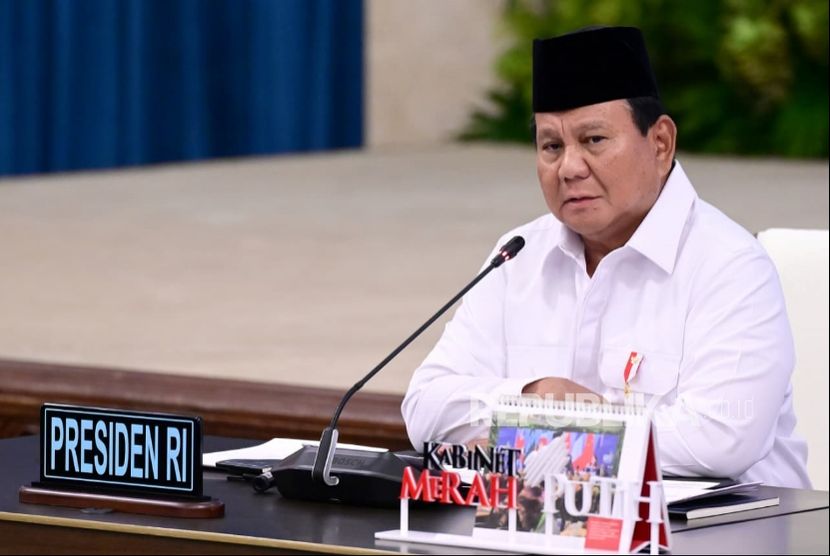
 Indonesian President Prabowo expressed important views on recent international developments and Indonesia's defense policy in an interview with Bloomberg. He stated that he was quite surprised by the attacks launched by the United States and Israel on Iran, and frankly said he could not see any rational or reasonable basis for this military action, believing it has exacerbated regional tensions. In response to external concerns that China might take advantage of the turmoil in the Middle East to take action on the Taiwan issue, Prabowo downplayed the possibility. He pointed out that the Chinese leaders are currently focused on improving people's livelihoods and will try their best to avoid open conflict, with the likelihood of a major escalation of related tensions being low.
In terms of defense and arms procurement, Prabowo confirmed that Indonesia is considering purchasing Chinese-made defense equipment, while emphasizing that Indonesia has the right to buy weapons from any country and will not form a military alliance with any major power as a result. He reiterated Indonesia's consistent non-aligned stance, maintaining friendly relations with all neighboring countries, and that its defense posture is entirely defensive. He stated clearly that Indonesia cannot become a member of any military alliance and that, should a situation arise, Indonesia cannot rely on any party.
Indonesia has previously shown interest in Chinese-made Chengdu J-10 fighter jets, air defense systems, and several warships, but so far no further progress has been made on the procurement plans. The latest development indicates that Indonesia is now more inclined to consider purchasing the JF-17 Thunder Block III 4.5-generation fighter jet, jointly developed by Pakistan and China. Pakistan has already promoted this model to Indonesia and is willing to provide a range of military cooperation measures as compensation, offering Indonesia a new option for armament.
Overall, against the backdrop of increasingly complex global geopolitics, Indonesia adheres to an independent, non-aligned foreign and defense strategy. While expressing concern over the escalation of the Middle East conflict, it actively broadens the sources of defense equipment to strengthen its own defense capabilities and safeguard national strategic security and autonomy.
Indonesian President Prabowo expressed important views on recent international developments and Indonesia's defense policy in an interview with Bloomberg. He stated that he was quite surprised by the attacks launched by the United States and Israel on Iran, and frankly said he could not see any rational or reasonable basis for this military action, believing it has exacerbated regional tensions. In response to external concerns that China might take advantage of the turmoil in the Middle East to take action on the Taiwan issue, Prabowo downplayed the possibility. He pointed out that the Chinese leaders are currently focused on improving people's livelihoods and will try their best to avoid open conflict, with the likelihood of a major escalation of related tensions being low.
In terms of defense and arms procurement, Prabowo confirmed that Indonesia is considering purchasing Chinese-made defense equipment, while emphasizing that Indonesia has the right to buy weapons from any country and will not form a military alliance with any major power as a result. He reiterated Indonesia's consistent non-aligned stance, maintaining friendly relations with all neighboring countries, and that its defense posture is entirely defensive. He stated clearly that Indonesia cannot become a member of any military alliance and that, should a situation arise, Indonesia cannot rely on any party.
Indonesia has previously shown interest in Chinese-made Chengdu J-10 fighter jets, air defense systems, and several warships, but so far no further progress has been made on the procurement plans. The latest development indicates that Indonesia is now more inclined to consider purchasing the JF-17 Thunder Block III 4.5-generation fighter jet, jointly developed by Pakistan and China. Pakistan has already promoted this model to Indonesia and is willing to provide a range of military cooperation measures as compensation, offering Indonesia a new option for armament.
Overall, against the backdrop of increasingly complex global geopolitics, Indonesia adheres to an independent, non-aligned foreign and defense strategy. While expressing concern over the escalation of the Middle East conflict, it actively broadens the sources of defense equipment to strengthen its own defense capabilities and safeguard national strategic security and autonomy.
Indonesian President Prabowo expressed important views on recent international developments and Indonesia's defense policy in an interview with Bloomberg. He stated that he was quite surprised by the attacks launched by the United States and Israel on Iran, and frankly said he could not see any rational or reasonable basis for this military action, believing it has exacerbated regional tensions. In response to external concerns that China might take advantage of the turmoil in the Middle East to take action on the Taiwan issue, Prabowo downplayed the possibility. He pointed out that the Chinese leaders are currently focused on improving people's livelihoods and will try their best to avoid open conflict, with the likelihood of a major escalation of related tensions being low.
In terms of defense and arms procurement, Prabowo confirmed that Indonesia is considering purchasing Chinese-made defense equipment, while emphasizing that Indonesia has the right to buy weapons from any country and will not form a military alliance with any major power as a result. He reiterated Indonesia's consistent non-aligned stance, maintaining friendly relations with all neighboring countries, and that its defense posture is entirely defensive. He stated clearly that Indonesia cannot become a member of any military alliance and that, should a situation arise, Indonesia cannot rely on any party.
Indonesia has previously shown interest in Chinese-made Chengdu J-10 fighter jets, air defense systems, and several warships, but so far no further progress has been made on the procurement plans. The latest development indicates that Indonesia is now more inclined to consider purchasing the JF-17 Thunder Block III 4.5-generation fighter jet, jointly developed by Pakistan and China. Pakistan has already promoted this model to Indonesia and is willing to provide a range of military cooperation measures as compensation, offering Indonesia a new option for armament.
Overall, against the backdrop of increasingly complex global geopolitics, Indonesia adheres to an independent, non-aligned foreign and defense strategy. While expressing concern over the escalation of the Middle East conflict, it actively broadens the sources of defense equipment to strengthen its own defense capabilities and safeguard national strategic security and autonomy.
Indonesian President Prabowo expressed important views on recent international developments and Indonesia's defense policy in an interview with Bloomberg. He stated that he was quite surprised by the attacks launched by the United States and Israel on Iran, and frankly said he could not see any rational or reasonable basis for this military action, believing it has exacerbated regional tensions. In response to external concerns that China might take advantage of the turmoil in the Middle East to take action on the Taiwan issue, Prabowo downplayed the possibility. He pointed out that the Chinese leaders are currently focused on improving people's livelihoods and will try their best to avoid open conflict, with the likelihood of a major escalation of related tensions being low.
In terms of defense and arms procurement, Prabowo confirmed that Indonesia is considering purchasing Chinese-made defense equipment, while emphasizing that Indonesia has the right to buy weapons from any country and will not form a military alliance with any major power as a result. He reiterated Indonesia's consistent non-aligned stance, maintaining friendly relations with all neighboring countries, and that its defense posture is entirely defensive. He stated clearly that Indonesia cannot become a member of any military alliance and that, should a situation arise, Indonesia cannot rely on any party.
Indonesia has previously shown interest in Chinese-made Chengdu J-10 fighter jets, air defense systems, and several warships, but so far no further progress has been made on the procurement plans. The latest development indicates that Indonesia is now more inclined to consider purchasing the JF-17 Thunder Block III 4.5-generation fighter jet, jointly developed by Pakistan and China. Pakistan has already promoted this model to Indonesia and is willing to provide a range of military cooperation measures as compensation, offering Indonesia a new option for armament.
Overall, against the backdrop of increasingly complex global geopolitics, Indonesia adheres to an independent, non-aligned foreign and defense strategy. While expressing concern over the escalation of the Middle East conflict, it actively broadens the sources of defense equipment to strengthen its own defense capabilities and safeguard national strategic security and autonomy.