


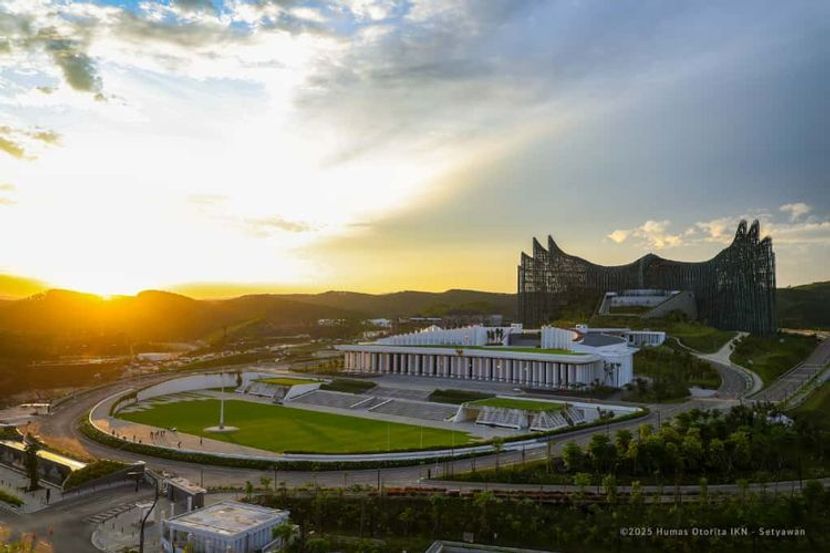
 The Constitutional Court (MK) recently ruled on a review of land rights duration in Law No. 21 of 2023 concerning the New Capital (IKN), emphasizing that national development cannot override the constitution. The constitution stipulates that land, water, and natural resources are under state control to achieve the greatest welfare of the people. The MK considered that granting cultivation rights, building rights, and usage rights for a period of 130-190 years is excessively long, potentially causing the state to lose control over strategic land assets.
The ruling is not an obstacle to development, but ensures development follows the constitutional track, with state control and public benefit, preventing land rights from becoming a tool for long-term capital interests. IKN land issues involve three-party interests of the state, investors, and local residents, where land is not a commodity but a strategic resource. The MK set more moderate durations: cultivation rights up to 35+25+30 years, building rights up to 30+20+30 years, and usage rights similarly, subject to objective evaluation criteria, with no automatic extension.
The government needs to reassess the relationship between land and investment. Poor management can harm the interests of current and future generations. Although the ruling does not hinder investment, it reminds that investment cannot come at the expense of intergenerational equity and state control over strategic assets. The government must review relevant regulations to align with constitutional principles, balance public and investor trust, and ensure development proceeds under the rule of law, making IKN a symbol of mature national management and construction.
The Constitutional Court (MK) recently ruled on a review of land rights duration in Law No. 21 of 2023 concerning the New Capital (IKN), emphasizing that national development cannot override the constitution. The constitution stipulates that land, water, and natural resources are under state control to achieve the greatest welfare of the people. The MK considered that granting cultivation rights, building rights, and usage rights for a period of 130-190 years is excessively long, potentially causing the state to lose control over strategic land assets.
The ruling is not an obstacle to development, but ensures development follows the constitutional track, with state control and public benefit, preventing land rights from becoming a tool for long-term capital interests. IKN land issues involve three-party interests of the state, investors, and local residents, where land is not a commodity but a strategic resource. The MK set more moderate durations: cultivation rights up to 35+25+30 years, building rights up to 30+20+30 years, and usage rights similarly, subject to objective evaluation criteria, with no automatic extension.
The government needs to reassess the relationship between land and investment. Poor management can harm the interests of current and future generations. Although the ruling does not hinder investment, it reminds that investment cannot come at the expense of intergenerational equity and state control over strategic assets. The government must review relevant regulations to align with constitutional principles, balance public and investor trust, and ensure development proceeds under the rule of law, making IKN a symbol of mature national management and construction.
The Constitutional Court (MK) recently ruled on a review of land rights duration in Law No. 21 of 2023 concerning the New Capital (IKN), emphasizing that national development cannot override the constitution. The constitution stipulates that land, water, and natural resources are under state control to achieve the greatest welfare of the people. The MK considered that granting cultivation rights, building rights, and usage rights for a period of 130-190 years is excessively long, potentially causing the state to lose control over strategic land assets.
The ruling is not an obstacle to development, but ensures development follows the constitutional track, with state control and public benefit, preventing land rights from becoming a tool for long-term capital interests. IKN land issues involve three-party interests of the state, investors, and local residents, where land is not a commodity but a strategic resource. The MK set more moderate durations: cultivation rights up to 35+25+30 years, building rights up to 30+20+30 years, and usage rights similarly, subject to objective evaluation criteria, with no automatic extension.
The government needs to reassess the relationship between land and investment. Poor management can harm the interests of current and future generations. Although the ruling does not hinder investment, it reminds that investment cannot come at the expense of intergenerational equity and state control over strategic assets. The government must review relevant regulations to align with constitutional principles, balance public and investor trust, and ensure development proceeds under the rule of law, making IKN a symbol of mature national management and construction.
The Constitutional Court (MK) recently ruled on a review of land rights duration in Law No. 21 of 2023 concerning the New Capital (IKN), emphasizing that national development cannot override the constitution. The constitution stipulates that land, water, and natural resources are under state control to achieve the greatest welfare of the people. The MK considered that granting cultivation rights, building rights, and usage rights for a period of 130-190 years is excessively long, potentially causing the state to lose control over strategic land assets.
The ruling is not an obstacle to development, but ensures development follows the constitutional track, with state control and public benefit, preventing land rights from becoming a tool for long-term capital interests. IKN land issues involve three-party interests of the state, investors, and local residents, where land is not a commodity but a strategic resource. The MK set more moderate durations: cultivation rights up to 35+25+30 years, building rights up to 30+20+30 years, and usage rights similarly, subject to objective evaluation criteria, with no automatic extension.
The government needs to reassess the relationship between land and investment. Poor management can harm the interests of current and future generations. Although the ruling does not hinder investment, it reminds that investment cannot come at the expense of intergenerational equity and state control over strategic assets. The government must review relevant regulations to align with constitutional principles, balance public and investor trust, and ensure development proceeds under the rule of law, making IKN a symbol of mature national management and construction.