


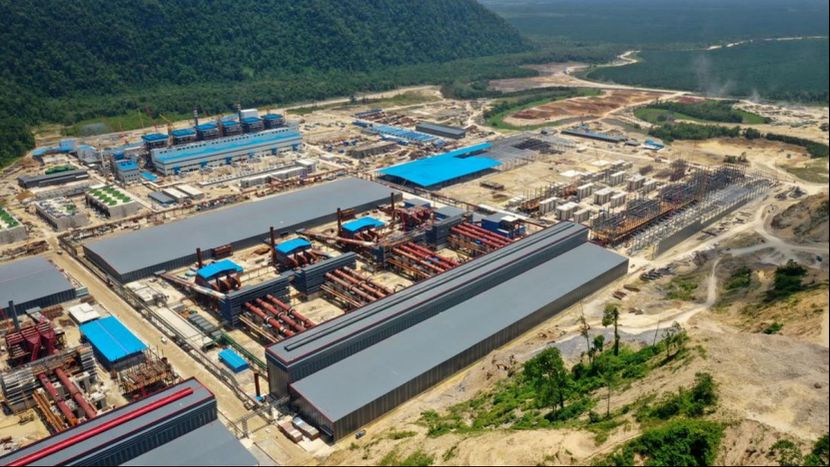
President Prabowo recently signed Government Regulation No. 28, which governs risk-based business licensing. The policy restricts investment in new nickel smelter projects that are specifically designed to produce nickel intermediate products (such as nickel matte, mixed hydroxide precipitate MHP, ferronickel FeNi, and nickel pig iron NPI), potentially affecting related planned projects after 2027.
The regulation requires nickel smelting companies to commit to advancing deep processing and not stop at nickel ore intermediate products. Companies using pyrometallurgical technology must submit a statement that they will not produce NPI, FeNi, and nickel matte; companies using hydrometallurgical or high-pressure acid leaching (HPAL) technology will also be restricted if they only produce MHP (commonly used as raw material for electric vehicle batteries). These smelters fall under the manufacturing sector and are regulated by the Industrial Business License (IUI) issued by the Ministry of Industry. Citigroup analysts noted that this policy could cause delays or even cancellations of some projects under construction. Although it does not directly affect projects already under construction with IUI, it will impact projects completed after 2027. They mentioned that policy details are still pending, including the level of enforcement. The government is signaling its determination to resolve the domestic nickel oversupply, although the new regulation was issued in June and has only recently become a hot topic in market discussions.