


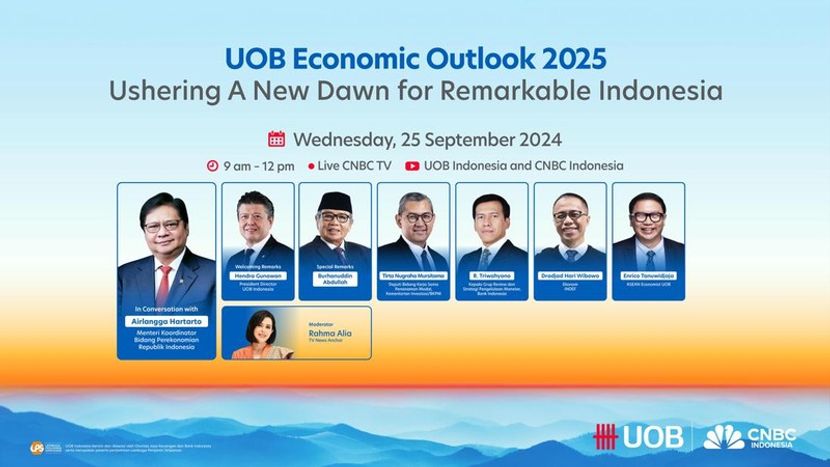
 rnrnIndonesia has become one of the world's major economies and the largest economy in ASEAN, which has brought optimism that the "Golden Indonesia 2045" dream can be realized. In addition, Indonesia successfully conducted democratic elections and maintained political stability at the beginning of this year. After the new government election, economic policy has become the focus of the new leadership, aiming to achieve higher, sustainable, and quality growth for Indonesia. Through expansionary policies, especially fiscal policy, it is believed that Indonesia can achieve higher growth momentum than the current 5%-6% range. In recent years, structural transformation areas such as downstream commodity processing, capital transfer, and openness to investment projects have yielded results. This is concrete evidence that Indonesia continues to move forward pragmatically towards better social prosperity.rnrnThis period is the best time to welcome Indonesia's new leadership and understand what measures can be taken to formulate an economic strategy aligned with national growth. First, it is necessary to correctly understand the potential of Indonesia's economic growth. Indonesia has achieved stable growth of at least 5% relying solely on household consumption. However, Indonesia still has opportunities to increase higher-quality, higher-value-added investments that can significantly contribute to economic growth. Indonesia can also focus on fiscal policies targeting economic sectors with higher multiplier effects. Moreover, Indonesia has the ability to align foreign direct investment policies with key industries to increase output and achieve higher economic growth.rnrnSecond, the next decade is very important for Indonesia as it faces changes in the global landscape brought about by technological transformation and geopolitical uncertainty. Indonesia must readjust its strategic focus to leverage its large population and adopt technologies needed to improve overall productivity. Third, to initiate new economic policies and continue the transformation policies that have been successful, Indonesia needs to look toward 2045. The path Indonesia is taking is quite steep because the country must grow at least 7%—persisting at 8%—to achieve sustainable economic growth and escape the threat of the middle-income trap. To this end, it is necessary to thoroughly answer questions related to the main economic expenditure priorities of the next government. UOB Indonesia believes that if the growth-driven fiscal policy strategy is correctly understood, foreign investors will certainly come to Indonesia. They not only pursue Indonesia's growth dividends but also the potential to increase domestic investment. In the future, this effort will accelerate Indonesia's economic growth and realize its ambition to become one of the fastest-growing and high-income countries in the world. The UOB Indonesia 2025 Economic Outlook will discuss all these important issues, with the theme "Welcome Great Indonesia / A New Dawn for an Excellent Indonesia."rnrnThe event will be held on Wednesday, September 25, 2024, at the Grand Ballroom of Hotel Indonesia Kempinski. The Coordinating Minister for Economic Affairs, Advisor to the President-Elect, UOB ASEAN Economist, Deputy for Investment Cooperation at the Investment Ministry/BKPM, Head of the Monetary Management Review and Strategy Group at Bank Indonesia's Securities Management and Asset Department, and INDEF Economist will all attend this annual forum. It is hoped that the "UOB Indonesia 2025 Economic Outlook" will not only outline the economic strategy of the new leadership but also provide ideas and strategies to support Indonesia's economy in achieving increasingly higher quality levels and prosperity. The UOB Indonesia 2025 Economic Outlook will also be live-streamed via UOB Indonesia's YouTube account and CNBC Indonesia TV.
 rnrnIndonesia has become one of the world's major economies and the largest economy in ASEAN, which has brought optimism that the "Golden Indonesia 2045" dream can be realized. In addition, Indonesia successfully conducted democratic elections and maintained political stability at the beginning of this year. After the new government election, economic policy has become the focus of the new leadership, aiming to achieve higher, sustainable, and quality growth for Indonesia. Through expansionary policies, especially fiscal policy, it is believed that Indonesia can achieve higher growth momentum than the current 5%-6% range. In recent years, structural transformation areas such as downstream commodity processing, capital transfer, and openness to investment projects have yielded results. This is concrete evidence that Indonesia continues to move forward pragmatically towards better social prosperity.rnrnThis period is the best time to welcome Indonesia's new leadership and understand what measures can be taken to formulate an economic strategy aligned with national growth. First, it is necessary to correctly understand the potential of Indonesia's economic growth. Indonesia has achieved stable growth of at least 5% relying solely on household consumption. However, Indonesia still has opportunities to increase higher-quality, higher-value-added investments that can significantly contribute to economic growth. Indonesia can also focus on fiscal policies targeting economic sectors with higher multiplier effects. Moreover, Indonesia has the ability to align foreign direct investment policies with key industries to increase output and achieve higher economic growth.rnrnSecond, the next decade is very important for Indonesia as it faces changes in the global landscape brought about by technological transformation and geopolitical uncertainty. Indonesia must readjust its strategic focus to leverage its large population and adopt technologies needed to improve overall productivity. Third, to initiate new economic policies and continue the transformation policies that have been successful, Indonesia needs to look toward 2045. The path Indonesia is taking is quite steep because the country must grow at least 7%—persisting at 8%—to achieve sustainable economic growth and escape the threat of the middle-income trap. To this end, it is necessary to thoroughly answer questions related to the main economic expenditure priorities of the next government. UOB Indonesia believes that if the growth-driven fiscal policy strategy is correctly understood, foreign investors will certainly come to Indonesia. They not only pursue Indonesia's growth dividends but also the potential to increase domestic investment. In the future, this effort will accelerate Indonesia's economic growth and realize its ambition to become one of the fastest-growing and high-income countries in the world. The UOB Indonesia 2025 Economic Outlook will discuss all these important issues, with the theme "Welcome Great Indonesia / A New Dawn for an Excellent Indonesia."rnrnThe event will be held on Wednesday, September 25, 2024, at the Grand Ballroom of Hotel Indonesia Kempinski. The Coordinating Minister for Economic Affairs, Advisor to the President-Elect, UOB ASEAN Economist, Deputy for Investment Cooperation at the Investment Ministry/BKPM, Head of the Monetary Management Review and Strategy Group at Bank Indonesia's Securities Management and Asset Department, and INDEF Economist will all attend this annual forum. It is hoped that the "UOB Indonesia 2025 Economic Outlook" will not only outline the economic strategy of the new leadership but also provide ideas and strategies to support Indonesia's economy in achieving increasingly higher quality levels and prosperity. The UOB Indonesia 2025 Economic Outlook will also be live-streamed via UOB Indonesia's YouTube account and CNBC Indonesia TV.